
Math Ambassadors: Regina Forlenza From Queens Botanical Garden
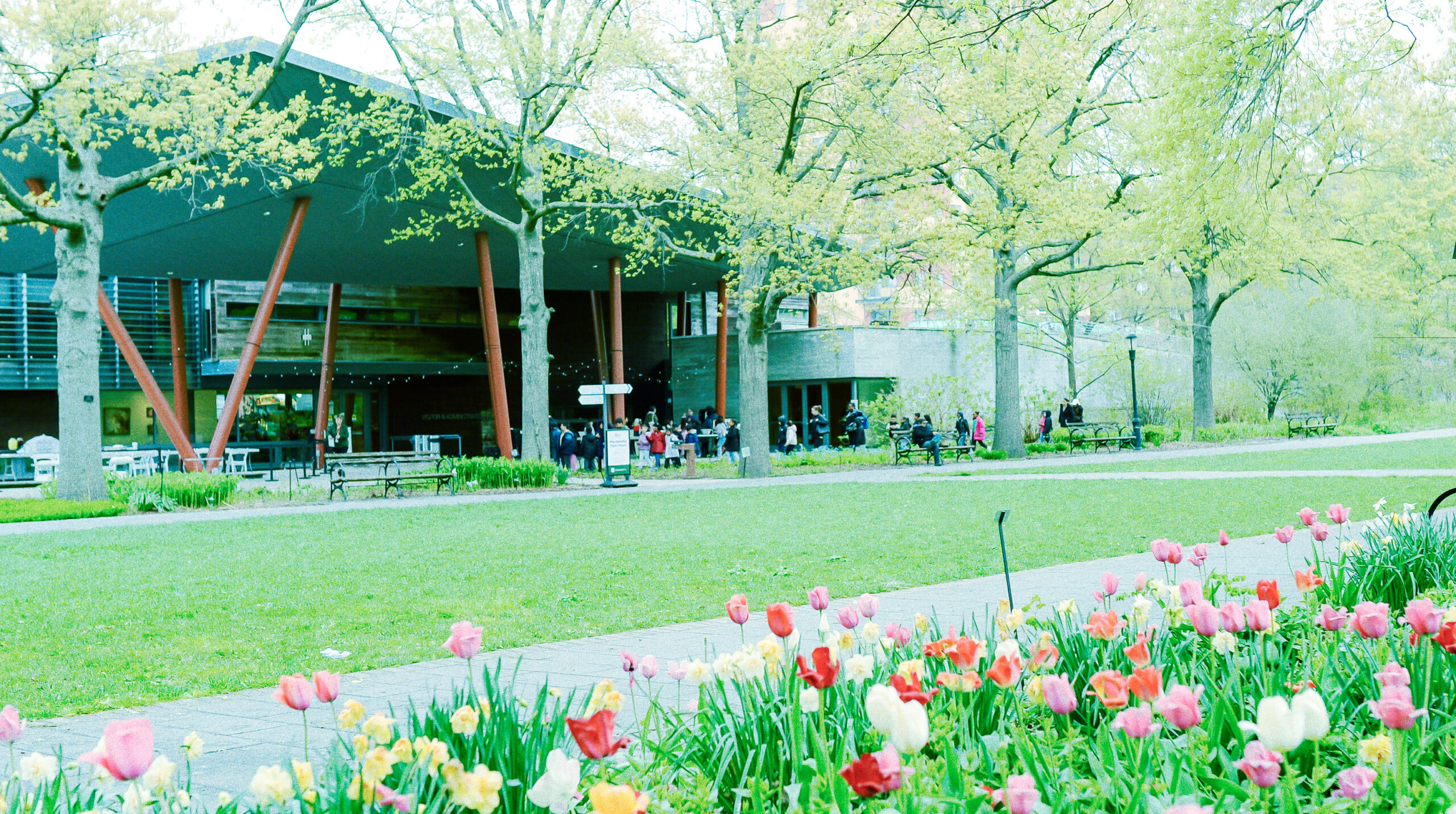
At New York City’s Queens Botanical Garden in Flushing, visitors come for cherry blossoms, roses and a carefully cultivated green space in the heart of the city’s most diverse borough. Now, they’re discovering something else woven throughout the landscape: the mathematical patterns that shape plants, flowers and ecosystems.
Through Math in Bloom, part of the Simons Foundation’s Infinite Sums initiative, six botanical gardens across the country, led by the San Antonio Botanical Garden, are creating opportunities for their visitors to experience math in nature.
Assistant Director of Visitor Services Regina Forlenza and Supervisor of Gardeners Morgan Potter, together with the garden’s horticulture staff, collaborated with Qiyao Zhu, a computational biologist with a background in mathematics at the Simons Foundation’s Flatiron Institute. Together, they developed math-inspired field guides, bilingual garden tours, public art activities and interactive installations. The programming reflects the garden’s longstanding commitment to serving as a resource for the Flushing community while welcoming visitors from across New York City and beyond. It culminates with a Math in Bloom Infinity Day celebration on Saturday, August 8.
We recently spoke with Forlenza about collaborating across disciplines, how the initiative has reshaped her perspective on math and what she hopes the community will take away as they explore the garden.
The transcript below has been edited for clarity and brevity.
Thank you for speaking with us! Can you start by telling us about your role at Queens Botanical Garden and what the garden means to Flushing?
Regina Forlenza: I’m the assistant director of visitor services. I’ve been at the garden for 16 years. Currently, my role in visitor service is engaging with our everyday visiting public, helping to design programming that reaches the diverse community of Queens. I think about how we give our community what they want.
We moved to this property in 1963 and were previously free to the community. For many of the people who grew up in Queens, this was their local green space. As the community’s gotten more built up and gentrified, we’ve kept our doors open every day and are woven into the community. We pride ourselves on access, giving out free passes liberally, and have wonderful partnerships with groups like the Simons Foundation. People in the community are proud to say that they’re members. So I see us as a real home or a beacon of health, community and wellness.
What has your relationship with math been like throughout your life and your career?
Regina Forlenza: Before Math in Bloom, math was something very abstract to me. I am a visual person and a visual artist. I have a BFA in visual arts and a master’s in art history, and I was an oil painter, so I thought I was going to be teaching in an art museum. My love of flowers and horticulture really brought me to the botanical garden. I now work in a living museum, but never in my life did I think I would be thinking about mathematics in my career. In college, I took the Math for the Abstract Thinker course, where I did a lot of mapping. So in my mind, I found the most abstract ways to think about math and weave it into my life.
It wasn’t until I met the five other Math in Bloom gardens at the kickoff meeting in San Antonio that I really started to immerse myself in the conversation around what else math could be. At first, I was very intimidated. The concepts felt far from what I’m used to. But talking with many like-minded, cultural, botanical professionals was refreshing when they also admitted some of the concepts were over their heads. It allowed me to say there are no wrong answers. If I think about a math concept in a certain way, our visitors may want to think about it this way too. As I’ve reintroduced different senior leadership to this initiative throughout the last six months, I’ve found myself becoming more confident in speaking about it the more I do. Then, as I started collaborating with Qiyao, I started to understand some of the concepts she was bringing to the table more. I mean, nowhere near at the level that she is, but it was a beautiful thing.
So where’s my relationship with math now? I’m open-minded to it. I have a lot of questions. But I see it more every day now, even at the botanical garden that I’ve been coming to every day for 16 years. I’m excited to look at things through a new lens.
Can you talk more about collaborating with the horticultural team and Qiyao?
Regina Forlenza: I love it. This experience has definitely fostered deeper conversations internally. I’ve worked with Morgan Potter my entire career here, and while I’ve had opportunities to work with her and be in meetings with her, I haven’t had the chance to really collaborate. She and I now ping-pong ideas back and forth, and it’s fostered a mutual deeper interest in what we do.
Bringing Qiyao into it has introduced another level of expertise. Anything we’ve approached her with, she’s open-minded to it and excited. Having her lead a tour for visitors to explore math in the garden in Mandarin is just a home run, and that’s something we wouldn’t have been able to bring to life if it weren’t for her.
How has Math in Bloom changed the visitor experience and physical landscape of the garden?
Regina Forlenza: We’ve been looking closely at the Infinite Sums Infinity Day Community Activity Pack and seeing how we can bring this to life in other ways. We are activating the hands-on ‘From Polygons to the Perfect Curve’ activity, which uses soccer ball shapes (which are not perfect spheres!) to explore how a collection of flat faces can approach the perfect curve of a sphere. We hosted a World Cup watch party with over 2,400 registered participants, and Math in Bloom soccer balls were such a great way to get people excited to come back for the next event on August 8 for Infinity Day. So in a way, it’s seeded other ideas for us, whether it’s featuring origami as a recurring craft that perfectly blends math, art and culture at our other events or just inviting daily visitors to explore the garden with our Math in Bloom field guides.
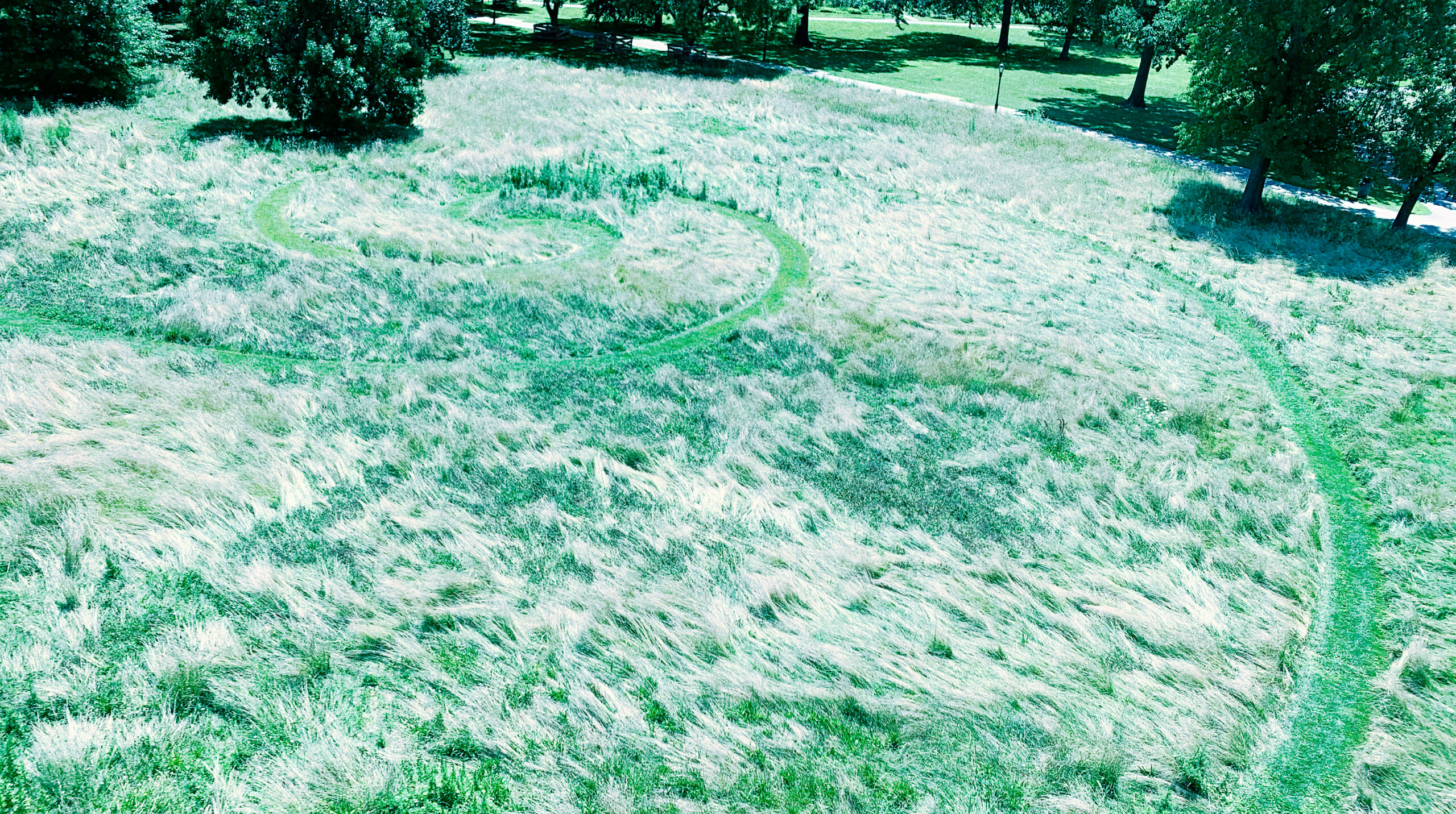
Now as far as the physical landscape, we’ve created a mathematically accurate Fibonacci spiral walking path where visitors can explore the mathematical growth patterns found in flower petals, pinecones and trees. The spiral path is on a lawn that was mostly empty and regularly mowed. Now that parts of the lawn are growing to let the spiral show, the lawn’s biodiversity has bloomed, from native plants we didn’t even realize grew in the garden to sightings of a wider variety of insects. This is something completely unique that was never part of our original architectural plan. People are loving it. So it’s changed our landscape, and I think that’s beautiful.
Can you walk us through the different ways visitors can engage with math at the garden on Infinity Day?
Regina Forlenza: I’ve passed the programming baton to Viviana, our assistant director of public programs. What I love about what she’s doing is that the program is designed to feel ‘infinite’. Our day will start at 10 a.m., and it’ll conclude at 10:30 p.m. This way, the garden is, in fact, activated all day. We will have Tai Chi performances in the morning, inspired by the garden’s existing Tai Chi collective, where members have been gathering first thing in the morning for over 30 years. We will have tours of the garden led by Morgan, the horticulture team and Qiyao, both in English and Mandarin. The night will conclude with an outdoor viewing of The Matrix, which is our math-themed movie, at around 8 p.m. when the sun goes down.
The garden has a rich history of connecting people with nature, art, and culture. Can you talk more about the ways that art will play a role at the garden on Infinity Day?
Regina Forlenza: We have an initiative running called the AnkhLave Arts Alliance. They are a group of BIPOC artists that will have six to eight site-specific installations and sculptures across the garden, including a piece at the center of the Fibonacci spiral walking path! This is an opportunity to introduce people that are coming from Math in Bloom to the art on site, from an interactive wind chime to 3D sculptures.
There’s also a math-inspired drop-in arts and crafts component that we’ll have people doing during the day. We’re using sunflowers as our main theme. There’ll also be a community art project that is “infinite,” where people keep on adding layers over and over to it.
That's awesome. How do you plan on keeping people engaged, even after they leave the garden?
Regina Forlenza: I think one of the goals is to keep inviting people back. We’re growing our own little “mathy” invite list, so the goal would be to invite these folks back and have them hopefully register to be one of the volunteers for future events, like on Fibonacci Day, on November 23. We’ve also invited Pi Day participants to bring themselves and up to four guests to the garden for free to try out the Math in Bloom field guide.
And what are you hoping folks will take away from visiting the garden and experiencing these math connections?
Regina Forlenza: I want to grow our adult audience. I think a lot of times people come here for the ephemeral seasons. We love spring cherry blossoms, or people love June roses. We are a living museum, and there’s so much educational content that you can take away from experiences like this. That’s why I’m so excited about the Math in Bloom field guides. They will continue telling this story long after the Math in Bloom series ends, giving people another reason to come back and experience the mathematical beauty of the garden in new ways.