Fibonacci Day Community Activity Pack
MONDAY, NOVEMBER 23, 2026
A set of activities that can be carried out in a community group or family setting, with young people or adults. Find PDF here.
Welcome to the Fibonacci Day 2026 Community Activity Pack!
This year, Fibonacci Day, Monday, November 23, 2026, will be celebrated as part of a yearlong initiative by the Science, Society & Culture division at the Simons Foundation called Infinite Sums. The initiative invites people across the country to reconnect with math in joyful, creative and meaningful ways. At the heart of this effort is community, people coming together to explore how math shows up in everyday life, from the rhythms of music to the spirals in nature, from storytelling to movement and more.
Whether you are a librarian, educator, caregiver, local business owner or simply a curious community member, this activity pack was created to help you lead engaging and inclusive Fibonacci Day celebrations. You do not need to be a “math person” to participate. Just bring your curiosity and see where the experience takes you.
Each activity in this pack offers a unique window into the idea of infinite sums: the endless adding up of small parts that come together to create something bigger, richer, and more complex. These activities highlight how simple steps, whether they involve numbers, shapes, words or actions, can reveal patterns and connections that go beyond what we can immediately see.
The activities are designed to be flexible, playful and accessible. They invite people of all ages, interests, and backgrounds to explore math in ways that are fun and meaningful. They can be used in libraries, community centers, classrooms, festivals or even at home, and they work well for groups of any size, including individuals exploring on their own.
We encourage you to connect these activities to what matters in your community. That could include local culture, lived experiences or personal passions. As you celebrate, feel free to share your Fibonacci Day moments, creations and discoveries on social media using #InfiniteSums.
Let’s celebrate together and discover the beauty and wonder of infinite sums in the world around us.
Why Fibonacci?
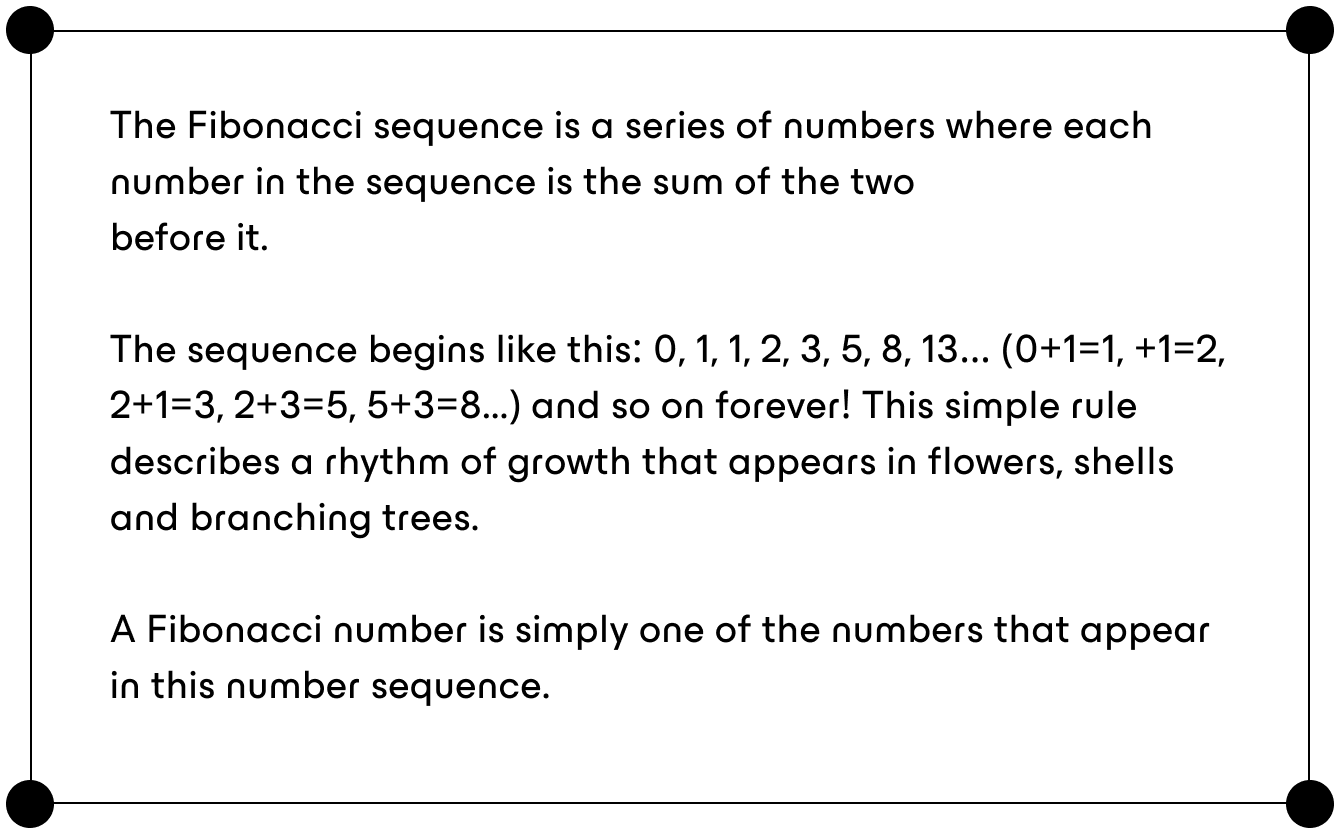
Mathematics is more than just numbers and formulas; it is the language of patterns that quietly shape the world around us. Among these patterns, the Fibonacci sequence stands out as one of the most beautiful and mysterious. It’s a simple pattern: 1, 1, 2, 3, 5, 8 … Each number is the sum of the two that came before it, yet from this simple rule springs a universe of surprising connections and natural harmony.
The sequence is commonly called the Fibonacci sequence, named after the Italian mathematician Leonardo Bonacci, though versions of these patterns were described much earlier in Indian and Middle Eastern mathematics and have been recognized across numerous cultures.
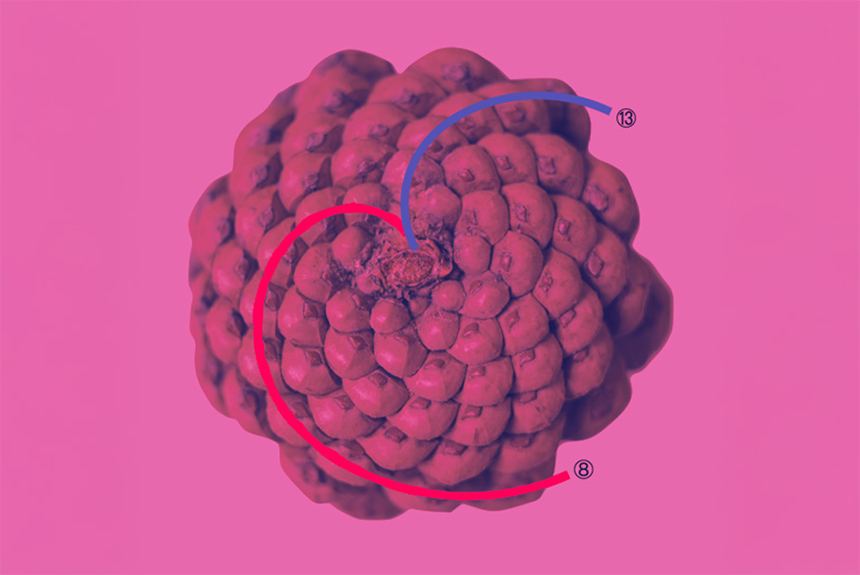
These numbers also appear in the natural world, in the arrangements of petals on a flower, the spirals of sunflower seeds, the scales of pinecones and the unfurling leaves of succulents. This sequence is nature’s secret code, a way of packing life’s complexity into simple, elegant order.
What makes the Fibonacci sequence truly inspiring is that it invites us to see the world differently. It reveals how growth and form follow patterns that are at once practical and breathtakingly beautiful. The spiral patterns that emerge from Fibonacci numbers are not only efficient: They captivate us because they reflect a composition that has inspired artists, architects and thinkers for centuries. The proportions tied to the sequence approach the golden ratio — a number thought to embody aesthetic perfection — found in the Parthenon, the works of Leonardo da Vinci and the delicate shapes of seashells.
This activity pack invites you to dive into these wonders through hands-on activities that celebrate both the math and the magic of the Fibonacci sequence. Whether you are in a library, a community center or your own home, Fibonacci Day is a moment to pause, explore and marvel at how a simple string of numbers can connect us to the patterns of life itself.
Fibonacci Day is a celebration of pattern, growth and the quiet beauty of numbers that echo through the world around us. You don’t need to be a mathematician or a scientist to appreciate it — anyone with curiosity and an open mind can discover the wonder hidden in the Fibonacci sequence. From pinecones and petals to architecture and music, these numbers reveal a hidden order that shapes our surroundings and remind us that math is more than rules and facts.
Take a moment. Trace the spirals. See how each step builds on the last, creating patterns that keep expanding. At its heart, Fibonacci Day is about uncovering how simple beginnings can lead to endless growth and surprising connections.
Start Here: Bringing Fibonacci Day (and Math) to Life
Math can feel intimidating and, for many, just seeing numbers sparks stress or anxiety. That feeling is real, but so is the potential for change. Math confidence grows in spaces where curiosity is welcomed, questions are encouraged, and mistakes are part of the journey. Whether you’re hosting an Infinity Day celebration, leading a group or gathering friends and family, this guide is here to help you create that kind of playful, welcoming environment.
Fibonacci Day is a perfect opportunity to make math feel alive, relevant and joyful. It’s a chance to explore math beyond the classroom walls through stories, creative problem-solving and community connections. From baking to architecture, farming to design, math shows up everywhere. By inviting others to share their experiences, you help reveal the many ways math shapes our world.
Use this guide as a starting point, not a script. Adapt it freely to fit your group’s age, background and interests. Whether you’re planning hands-on activities, hosting a guest speaker, or encouraging informal conversations, your energy and curiosity will set the tone.
A few tips for getting started:
- – Test it out. Try the activities yourself first so you see how they flow, have examples to share, and get a sense of how much time folks might need.
- – Keep it playful. Math comes alive through movement, storytelling, creativity and shared experiences.
- – Celebrate questions. Wondering “why?” or “what if?” is exactly the point.
- – Be flexible. You don’t need to follow every step or complete every activity; go where the energy leads!
- – Highlight real voices. Invite speakers or volunteers to share how math appears in their work or daily lives, and make room for diverse perspectives.
- – Engage, don’t perform. Focus on participation and discovery, not on being right or mastering content.
- – Stay curious. You don’t need all the answers. Explore and learn together.
- – Take your time. If one idea sparks joy or deep interest, stay with it. That’s meaningful learning.
- – Use infinity as a doorway. It’s okay if people leave with more questions than answers.
Above all, make it your own!
Activity 1: Fibonacci Puzzle
Exploration Goal:
Participants will explore how the Fibonacci sequence builds step by step and how this simple pattern creates spirals that appear throughout nature and art.
Overview:
From pinecones to seashells to galaxies, the Fibonacci number sequence shows up in countless living and nonliving systems.
In this activity, participants will color, cut and assemble puzzle pieces to build their own Fibonacci spiral. Along the way, they’ll see how numbers add together to grow, how spirals form and why this pattern has fascinated people for centuries.
Math Concepts:
Fibonacci sequence, ratio and proportion
Time:
20-30 minutes
Materials:
Prepare Ahead:
- – Printable Fibonacci sequence puzzle parts (1, 1, 2, 3, 5, 8, 13, 21) — colored (page 9), outline only (page 11)
- Fibonacci Sequence Reference Sheet (sample sequence and spiral illustration)
What You’ll Need:
- – Color pencils, crayons or markers to color in and/or decorate
- – Blank paper on which to build Fibonacci Puzzle
- – Scissors
Watch out! Adult supervision is required if young children are using scissors.
Instructions (Step-by-Step):
1. Prepare Fibonacci sequence puzzle parts. Print out as many rectangle part templates for participants. Each sheet will build one Fibonacci sequence rectangle. You may cut these ahead of time or allow participants to cut the pieces out themselves after decorating.
2. Introduce the Fibonacci sequence. Begin with an open invitation: “Who here has heard of the Fibonacci sequence?” Give participants a chance to share what they know. (Let a few voices be heard — someone might mention spirals, flowers or just the numbers themselves.)
- -Build on their responses and share the rule: “That’s right — thank you for sharing!” or “That’s okay, let’s learn it together!” “The Fibonacci sequence is a pattern where each number comes from adding the two before it. It starts 0, 1, 1, 2, 3, 5, 8 … and it keeps going forever. Even though it’s just numbers, this pattern shows up everywhere in nature — from the way petals grow on flowers to the bumps on a pinecone.”
- -Connect to the activity: “In a moment, we’re going to build this sequence ourselves using puzzle pieces, so you can see how the pattern grows. As we put them together, you’ll see how each new piece is built from the ones before it – just like the sequence itself.”
3. Decorate the puzzle pieces. Invite participants to color and decorate each square before cutting them out. Encourage them to connect their designs to the size of the square (e.g., a 1×1 square could have a 1-petal leaf, a 3×3 square could have a 3-petal flower, a 21×21 could have a 21-petal flower).
4. Cut out blocks. If pieces weren’t precut, let participants cut them after decorating. Remind them to keep track of all their squares and rectangles — each one is part of their growing Fibonacci sequence!
5. Assemble the Fibonacci puzzle. On a blank sheet of paper, glue down the puzzle pieces to build the full Fibonacci rectangle. Participants should begin with the largest rectangle, then fit the next smaller piece beside it, and continue working their way down to the smallest ones. As the pieces are added, the full Fibonacci rectangle will emerge.
- Encourage participants to look at the reference sheet.
- “What did you notice about how each new piece connects to the ones before?” Remind them how the bigger number is made up of the two smaller numbers.
6. Make a Fibonacci spiral. Start at the innermost 1×1 square. Using arcs that connect the corners of each square, draw a smooth spiral that passes through all the rectangles.
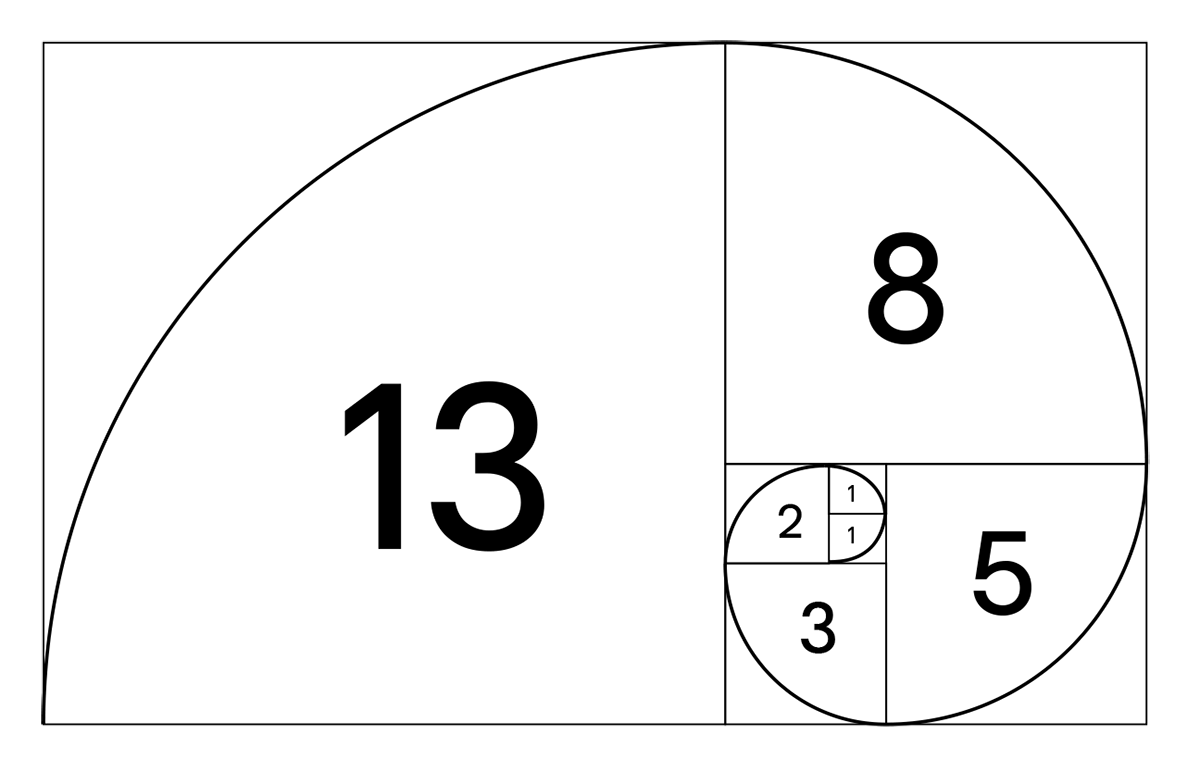
- – This creates the famous Fibonacci spiral! Not only is this pattern of numbers used in technology, architecture and even the stock market, but you can also see it throughout nature in pinecones, sunflowers, galaxies, seeds in berries, and so much more!
- – “Why might spirals like this be useful for plants or animals in nature?” Spirals help living things pack, grow or move in efficient ways. For example, sunflower seeds use a spiral pattern so they can fit as many as possible in a small space. Snail shells and ram horns spiral as they grow, so they can get bigger without changing shape. Even some plants spiral their leaves around the stem so each leaf gets sunlight. The spiral shape is nature’s trick for balancing growth, strength and efficiency!
- – “Where else have you seen spiral patterns in your life?”
Community Adaptations
Getting Younger Children Involved
- – Focus on coloring and simple assembly. Encourage them to tell stories about their spiral creations.
Getting Teens and Involved
- – Challenge them to measure ratios between squares (e.g., 8 ÷ 5 ≈ 1.6) and connect to the Golden Ratio.
- Explore deeper: how the Fibonacci sequence relates to architecture, finance and computer science.
Activity 2: Golden Treasure Hunt
Exploaration Goal:
Participants will discover how Fibonacci numbers connect to the golden ratio and explore to see how approximate patterns appear in nature, the human body and everyday objects.
Overview:
This hands-on exploration invites learners to investigate Fibonacci patterns and the golden ratio in natural and everyday objects. It blends measurement, pattern hunting and data analysis to bring the brilliance of this sequence to life.
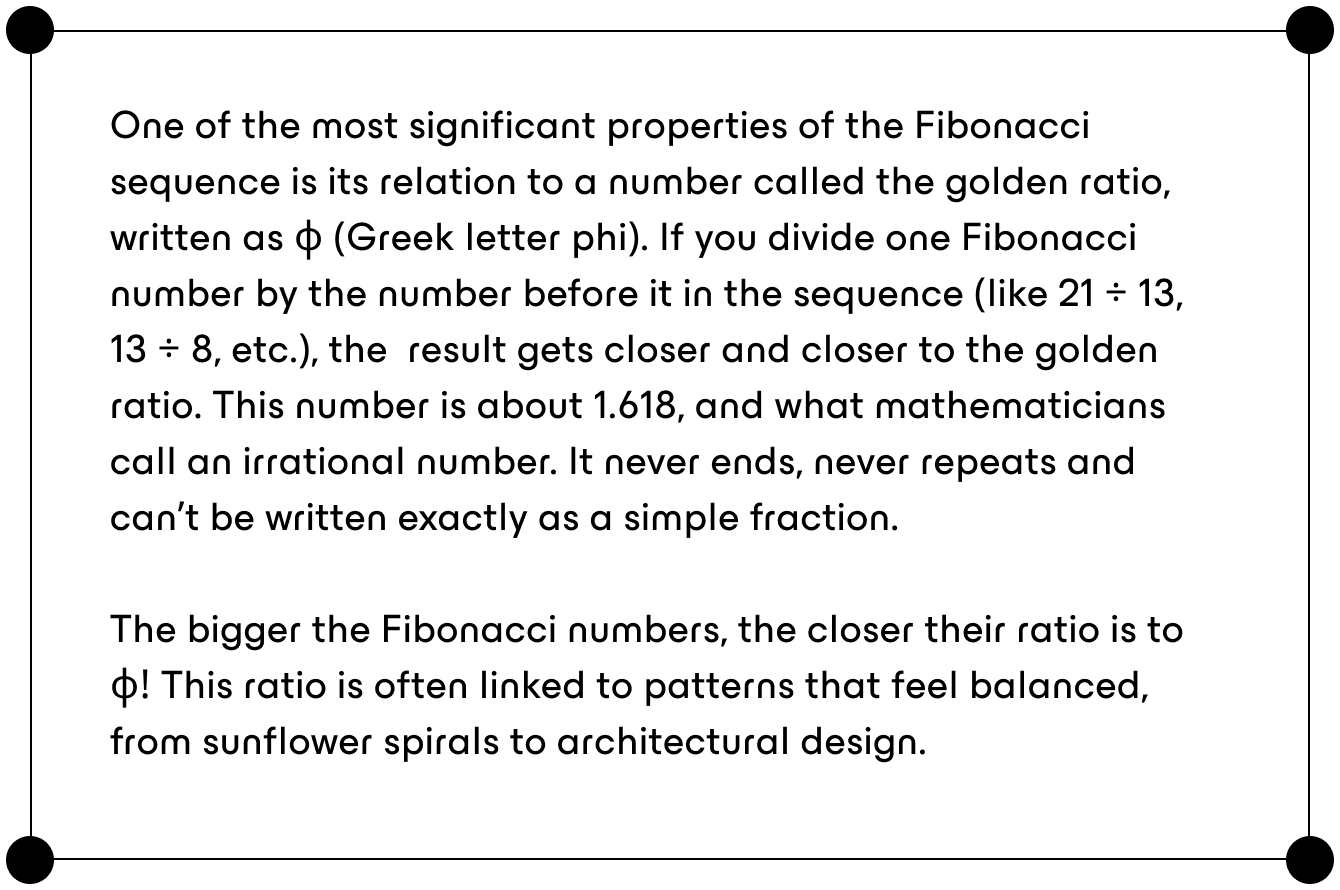
The golden ratio is a number that has fascinated people for thousands of years. Ancient Greeks called it the “extreme and mean ratio,” and artists, architects and mathematicians have been chasing its magic ever since. Centuries later, Fibonacci introduced a sequence to Europe where each number is the sum of the two before it. As the sequence grows, the ratio between consecutive numbers gets closer and closer to the golden ratio – showing how numbers and nature are connected.’
By measuring, comparing and spotting patterns, you’ll see how math quietly shapes the world around us – and maybe discover a few hidden surprises along the way. It brings nature’s infinite design into everyday discovery.
Math Concepts:
Fibonacci sequence, ratio and proportion, data collection and presentation, approximation and real-world measurement
Time:
25–40 minutes
Materials:
Prepare Ahead:
- – Printed photographs of natural items (or illustrations included below)
- – Optional: Collect natural items like pinecones, pineapples, daisies, etc.
What You’ll Need:
- – Tape measure or sewing measuring tape
- – Calculator
- – Pens or markers (at least two colors)
Instructions (Step-by-Step):
1. Set the stage. Briefly review the Fibonacci sequence: 1, 1, 2, 3, 5, 8, 13, 21, 34, 55 … and invite participants to share their familiarity with the golden ratio. “If you divide one Fibonacci number by the previous one, the result gets closer to the golden ratio — approximately 1.618.” Tell participants: “Today we’ll discover how these numbers show up in nature and in everyday objects.”
2. Explore natural items. Provide each participant or group with the photographs or gathered items.
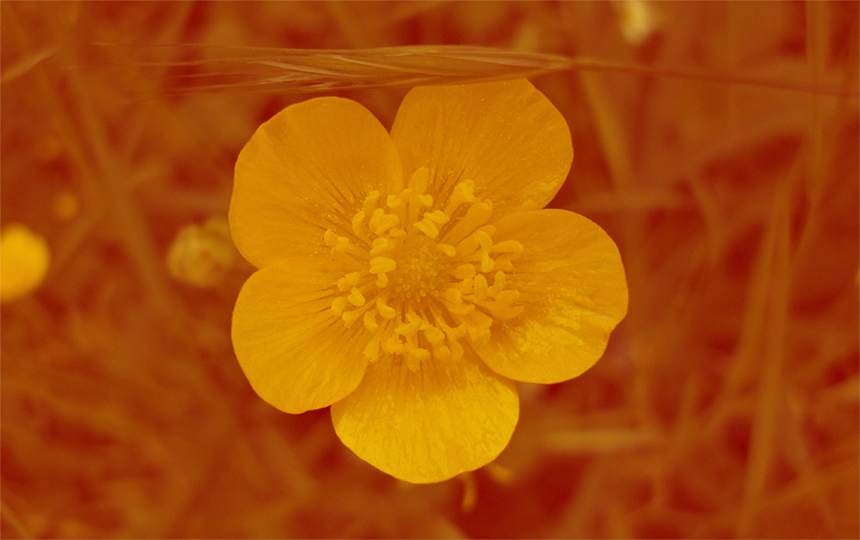
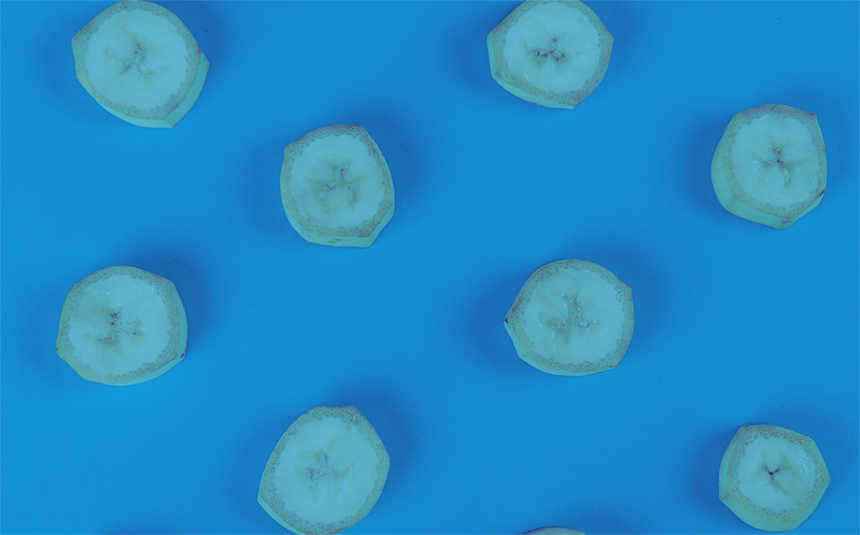
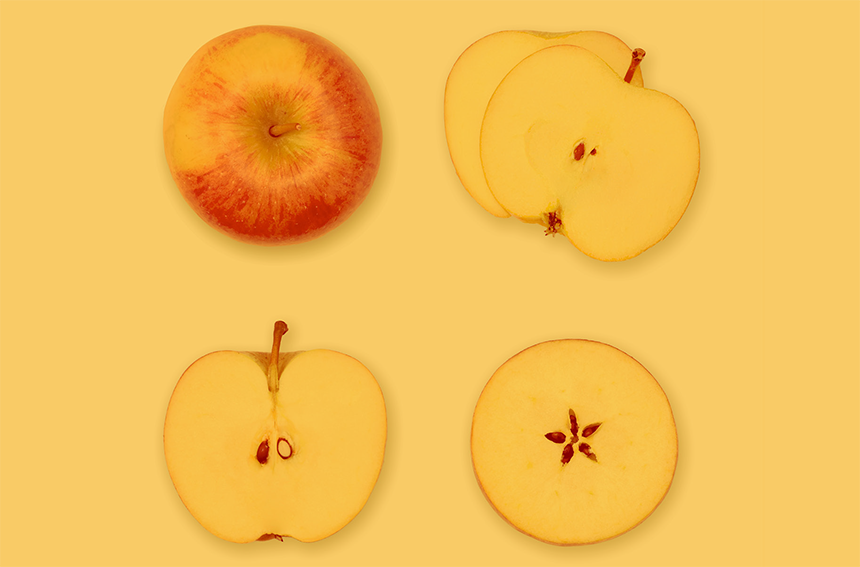
- – In these photos (pages 17-21), have them count visible petals or segments (often Fibonacci numbers like 5, 8, 13, 21). Many flowers have a number of petals that match Fibonacci numbers. In the example images provided:
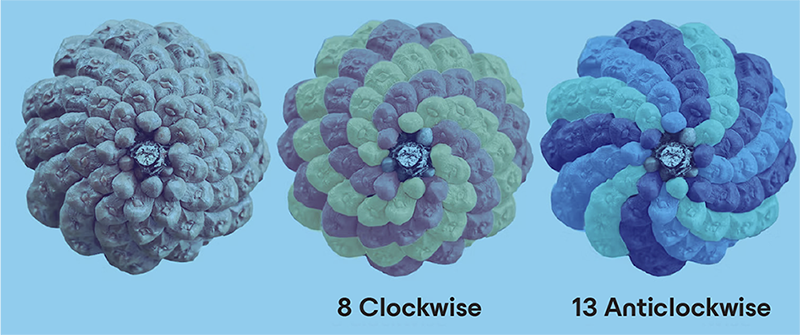
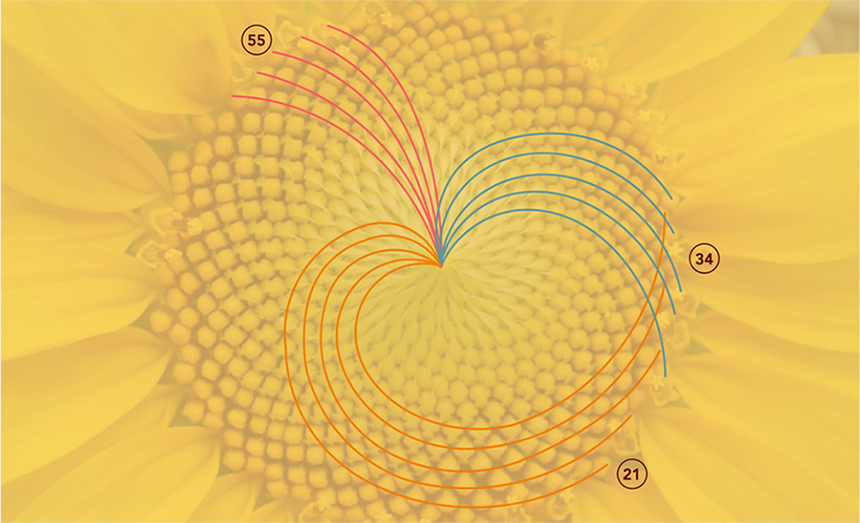
- In these photos (page 23), have them count visible spirals. Divide the larger count by the smaller (e.g., 8 spirals clockwise and 5 spirals counterclockwise) — many results will hover near 1.6. Guide them to calculate ratios: “Divide the larger count by the smaller (e.g. 13 spirals anticlockwise and 8 spirals clockwise) – many results will hover near 1.6. “Now divide the larger number by the smaller one. For example, 13 divided by 8 is 1.625. Nature isn’t perfect, but it often comes close to this ratio.”
-
– The lily has 3 petals (the 3 outer sepals are modified leaves)
– Depending on their variety or the growing conditions, daisies usually have 13, 21, 34, 55 or 89 petals. How many of these daisies have a fibonacci number of petals?
– Buttercups commonly have 5 petals
– Wild roses commonly have 5 petals
– Bananas when cross-sectioned have 3 distinct sections
3. Measure body proportions. Give participants tape measures and invite participants to measure:
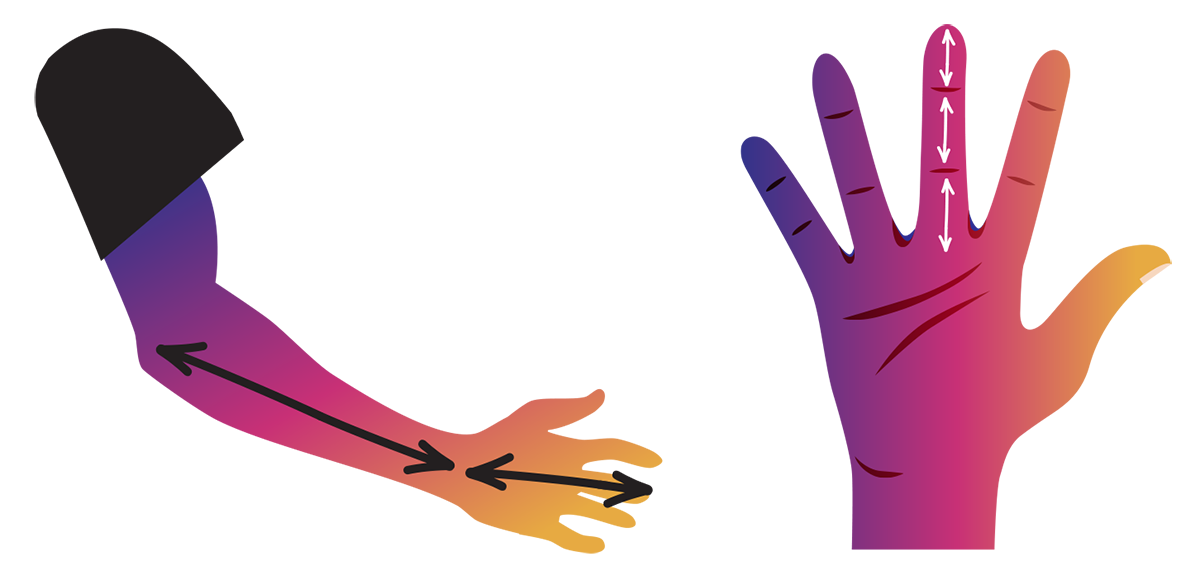
Left image: Compare forearm (forearm to wrist) vs. hand (wrist to middle fingertip) — these ratios might also be close to the golden ratio!
Right image: Look at each finger segment: tip, middle, base, base. For fingers, each segment is often about 1.618 x the length of the of the one before it!
4. Record and compare. After measuring, invite participants to call out interesting ratios they noticed or put their notes on a board/wall. Highlight variation as part of the fun: “See how some fingers are closer to 1.6 than others? Nature loves variety!”
5. Reflect and share. Spark a short conversation around:
- “Did you notice any patterns in the photos or natural items you explored?” Spiral counts, numbers of petals or segments often follow Fibonacci numbers (e.g., 3, 5, 8, 13 … ). Patterns are approximate and vary, which is normal in nature.
- “Where else have you seen spirals or this ratio in real life?” While not exact golden spirals, similar spirals and repeating forms show up in leaves, shells, waves, pinecones, snail shells, galaxies or even art and architecture.
- Emphasize that not every object will match perfectly, and that variation is part of what makes nature interesting.
- Discovery prompt: “You’ve just uncovered the same pattern that artists and architects have used for centuries, in Leonardo da Vinci’s sketches and even in modern design. How does it feel to see that connection for yourself?”
Community Adaptations
Host a nature scavenger walk if flowers or plants are available. Turn it into a treasure hunt: give a checklist (“Find something with three, five or eight petals!”).
Include local plants, gourds or cultural objects!
Getting Younger Children Involved
– Focus on spotting Fibonacci numbers in objects (e.g., “This flower has five petals!”). Celebrate discoveries with stickers or stamps.
– Pair young children with older helpers or facilitators for measuring.
Getting Teens and Adults Involved
– Encourage comparing their calculations to the golden ratio.
– Discuss why objects don’t always match perfectly and what that reveals about nature.
– Connect findings to art, architecture or technology. Add historical context: how the ratio appears in Renaissance art, sacred design and natural science.
– Lead conversations about why not everything is a perfect Fibonacci match and how approximation still reveals underlying mathematical beauty.




Activity 3: Rabbits, Rules and Numbers
Exploration Goal:
Participants will explore how simple rules for growth can create surprising patterns. By simulating a “rabbit population,” they’ll see the Fibonacci number sequence appear naturally and discover how earlier steps shape later ones.
Overview:
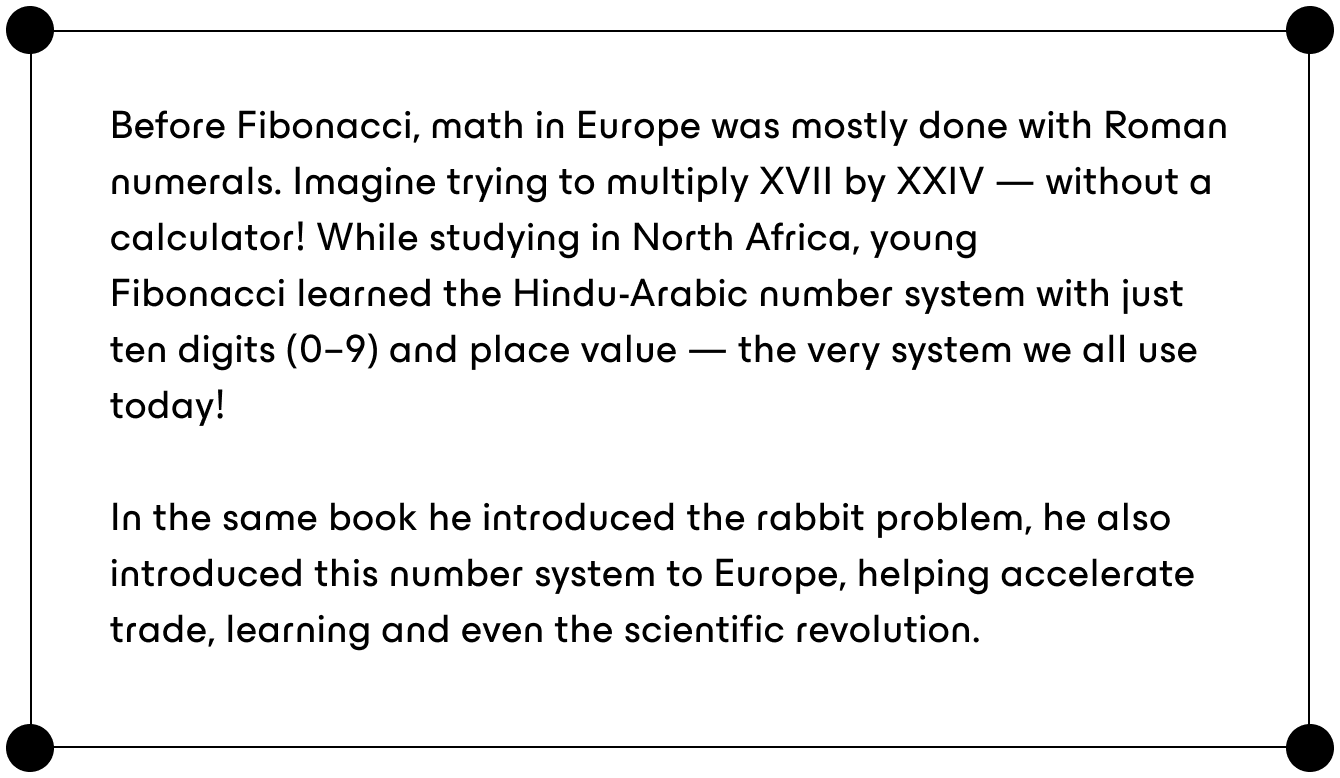
Over 800 years ago, a mathematician named Leonardo Bonacci — better known as Fibonacci — posed many curious puzzles in his book Liber Abaci (The Book of Calculation). One of the most famous asked: If a pair of baby rabbits is placed in an enclosure, how many pairs will there be after one year?
The rules were simple: Baby rabbits take one month to grow up, adult rabbits produce a new pair each month and no rabbits ever leave. From these rules, a surprising pattern emerges: 1, 1, 2, 3, 5, 8, 13… the famous Fibonacci sequence.
Many people today memorise Fibonacci numbers, but don’t always see where they come from. This handson modeling activity brings Fibonacci’s original rabbit problem from 1202 to life. In this activity, participants will move rabbit tokens month by month, seeing how each new generation builds on the last. This demonstrates how recursive growth — where each step builds on previous steps — creates the mathematical patterns we see throughout biology and nature.
Math Concepts:
recursive growth, Fibonacci sequence generation through biological rules, mathematical modeling of realworld systems, historical connection to Fibonacci’s Liber Abaci
Time:
25–35 minutes
Materials:
Prepare Ahead:
– Printed rabbit pair tokens or small paper cutouts (page 29)
– Printed rabbit Fibonacci number sequence reference sheet (page 31)
– Printed reference rule sheet(s) (page 33)
– Printed population recording sheet(s) (page 35)
– For each of these, Print 1-2 copies for the whole group to share if exploring together. Print more copies if participants will be exploring in small groups.
What You’ll Need:
– Large mat or table space for arranging rabbit populations
Instructions (Step-by-Step):
1. Introduce Fibonacci’s original problem. In 1202, Leonardo Fibonacci posed this question: “A pair of baby rabbits is placed in an enclosure. How many pairs will there be after one year?” Share the rules verbally and with either a poster printout or individual printed sheets. Invite participants to solve the problem as a group together or investigate in smaller teams.
- Baby rabbits take one month to become “grown-up.”
- Each grown-up pair adds one new baby pair each month.
- Rabbits don’t disappear in this simulation.
2. Set up the population. Give each group tokens in two colors: one for babies, one for grown-ups. Each token represents one pair of rabbits.
Month-by-month population growth (see reference sheet for a visual guide)
- – Month 1: “One tiny baby pair of rabbits sits in the meadow.”
- Place 1 baby token.
- Record: 1 pair total
- Month 2: “They’re still too young. No new rabbits yet!”
- Place 1 baby token (note it is the same pair as in month 1)
- Record: 1 pair total
- Month 3: “Now the grown rabbits can have a new baby pair.”
- Swap the original baby tokens to “grown up.”
- Add 1 baby token.
- Record: 2 pairs (1 mature, 1 baby)
- Month 4:
- “The original pair has another baby.” Place 1 grown-up token to represent last month’s grown-up pair.
- Place 1 baby token to represent last month’s baby pair.
- “The young pair from last month is growing up.” Add 1 new baby token.
- Record: 3 pairs (1 mature, 2 baby)
- Month 5:
- “The baby from 2 months ago is now also grown up.” Place 2 grown-up tokens to represent the original grown-up pair and the one that just matured.
- “The baby from last month is still growing up.” Place 1 baby token to represent last month’s baby pair.
- “The original pair has another baby again! Now since the first new baby pair has grown up, they can also have a new baby pair.” Place 2 baby tokens to the new baby pairs.
- Record: 5 pairs (2 mature, 3 baby)
- Month 6:
- “Now the baby born in month 4 is also grown up!” Place 3 grown-up tokens.
- “The 2 baby pairs from last month are still growing up.” Place 2 baby tokens to represent last month’s baby pairs.
- “And each of the grown-ups have a new baby pair.” Place 3 baby tokens to the new baby pairs.
- Record: 8 pairs (3 mature, 5 baby)
- Month 7:
- “Now the 2 baby pairs born in month 5 are grown up!” Place 5 grown-up tokens.
- “The 3 baby pairs from last month are still growing up.” Place 3 baby tokens to represent last month’s baby pairs.
- “And each of the 5 grown-ups have a new baby pair.” Place 5 baby tokens to the new baby pairs.
- Record: 13 pairs (5 mature, 8 baby)
- Month 8:
- “Now the 3 baby pairs born in month 6 are grown-up!” Place 8 grown-up tokens.
- “The 5 baby pairs from last month are still growing up.” Place 5 baby tokens to represent last month’s baby pairs.
- “And each of the 8 grown-ups have a new baby pair.” Place 8 baby tokens to the new baby pairs.
- Record: pairs (8 mature, 13 baby)
3. The discovery moment. “What pattern do you notice in how the rabbit population grows each month?” “Can you see how each month’s number is made from adding the numbers of the two months before?” For example, month 5 = month 4 + month 3 → 5 = 3 + 2. This is the Fibonacci sequence in action!
4. Reflect and connect. Guide a conversation by asking questions like:
- “What would happen if rabbits could ‘grow up’ immediately? How would the numbers look different?” If every new pair can make babies immediately, the population would double each month. With the rules that Fibonacci used in his puzzle, the growth is slower. This shows how different simple rules can create very different patterns over time!
- “Where else in nature do we see growth that depends on previous generations?” In addition to animal population sizes, you can see it in pinecones, sunflower seeds, tree branches and shells — structures where each new layer builds on the ones before.
5. Connect to the historical significance: “You just recreated the exact problem that introduced Fibonacci numbers to Europe 800 years ago!”
Community Adaptations
Use large cutouts for a more theatrical presentation.
Connect the activity to local wildlife, conservation or gardening conversations — how populations grow and resources matter.
Getting Younger Children Involved
– Stop at month 5 or 6 to keep numbers manageable
Getting Teens and Adults Involved
– Encourage discussing recursion, which is the idea of defining something in terms of itself. “We were looking at the total number of tokens before. Do you notice anything about the pattern of grown-up rabbit pairs specifically? What about baby rabbit pairs?” The number of mature rabbit pairs and baby rabbit pairs also follows the Fibonacci sequence!
– Talk more about the historical context of Fibonacci’s Liber Abaci and its influence on European mathematics and the Renaissance.
– Explore practical applications: population modeling, resource management and biological research. Scientists and resource managers use similar math to predict populations of animals, plan crops and understand ecosystems. Fibonaccilike patterns also appear in biological research, such as branching in trees and arrangements of seeds and petals.
– Compare with modern population models — human populations, wildlife and crops all follow this principle: Even if the rules are simple, the environment shapes what actually happens.
Activity 4: Nature’s Infinite Design
Exploration Goal:
Participants will explore why Fibonacci numbers underlie phyllotaxis — the arrangement of leaves, petals and seeds in nature. By building their own flowers with paper and pipe cleaners, they’ll discover how repeating growth rules create efficient packing and optimal exposure to sunlight, guided by the golden angle.
Overview:
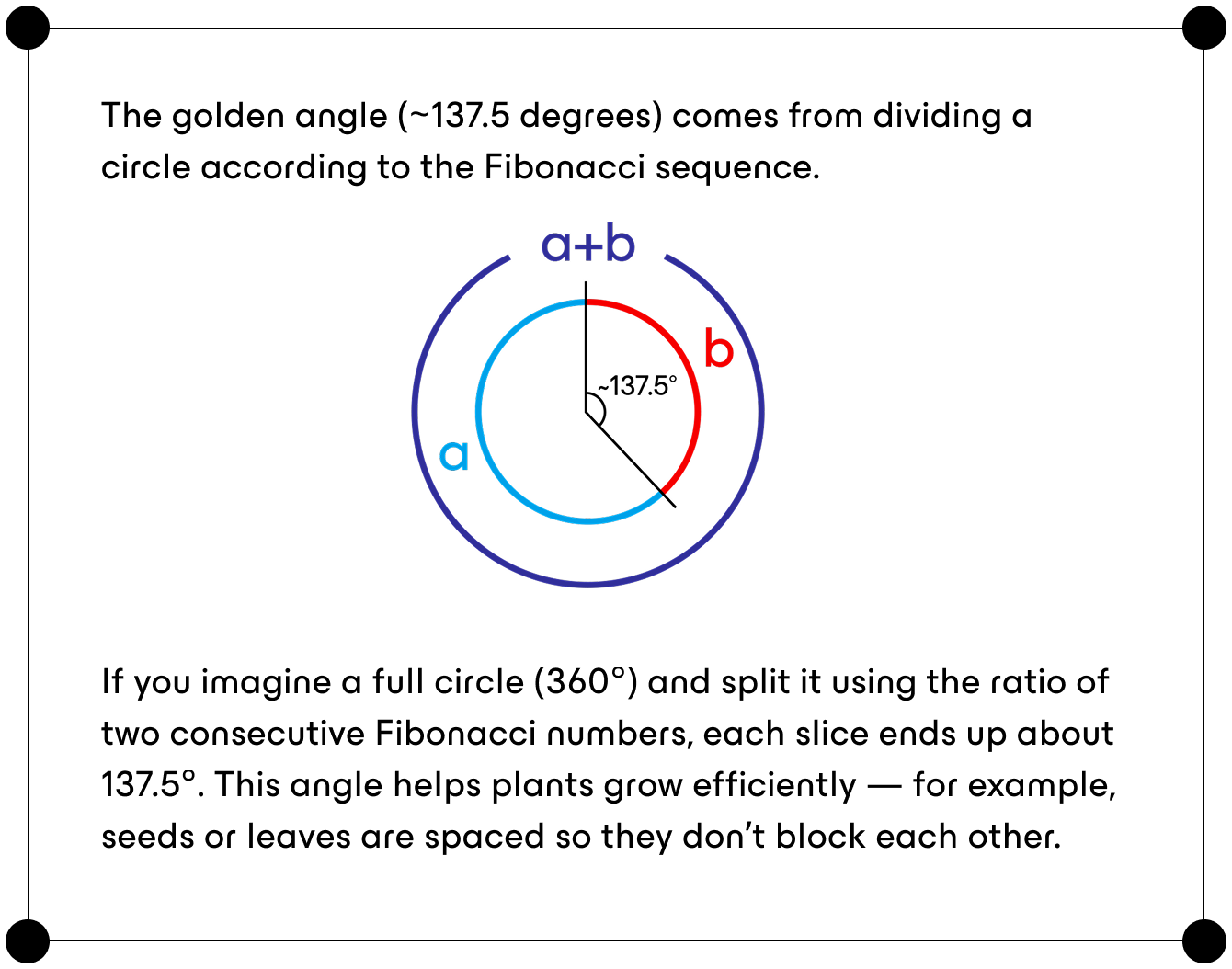
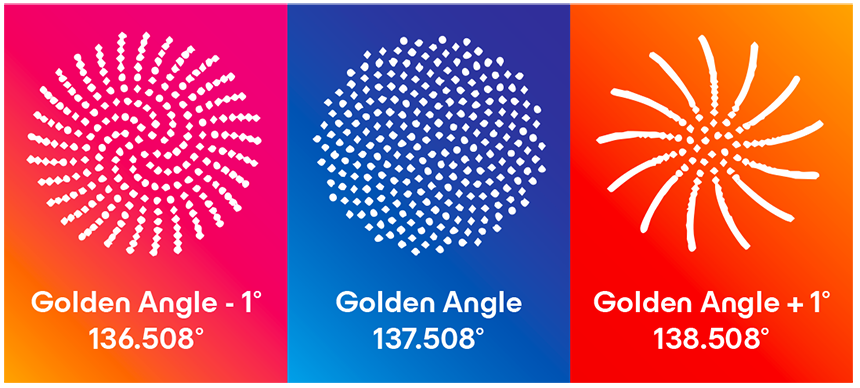
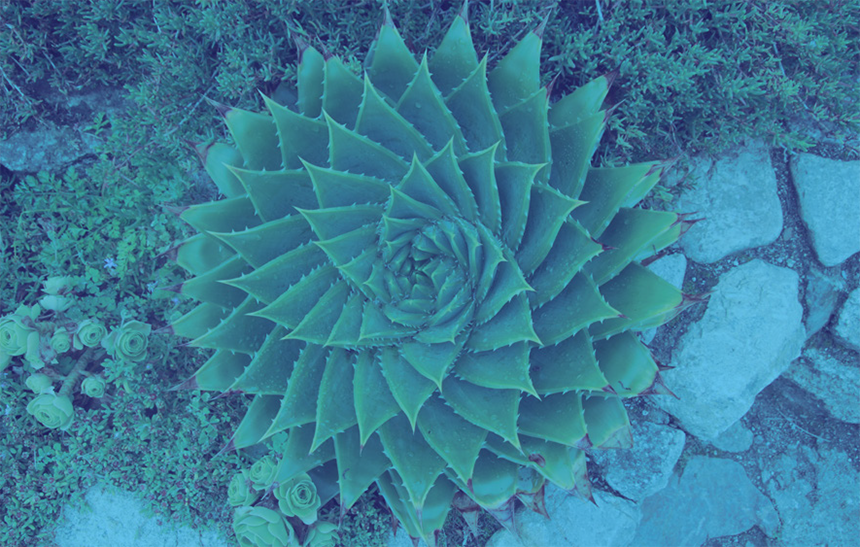
Why do some succulents and pinecone scales spiral so beautifully? It’s not magic — it’s math in action! Plants arrange leaves, petals and seeds using spirals and angles that follow Fibonacci numbers , a phenomenon called phyllotaxis. If you’re a plant, your leaves want sunshine without bumping into each other. Each new leaf sprouts at an angle that keeps it from shading the ones below — one of the most common angles is the Fibonacci or golden angle.
In this hands-on activity, participants will build flowers and stems using paper petals and pipe cleaners. As petals spiral outward and leaves grow along stems, learners will experience how simple repeated rules create complex, elegant patterns — just like in nature. Along the way, they’ll explore the connection between math, biology and art and see firsthand how the golden angle guides growth in plants.
Math Concepts:
Fibonacci sequence, spiral counts, angles, packing efficiency
Time:
20–30 minutes
Materials:
Prepare Ahead:
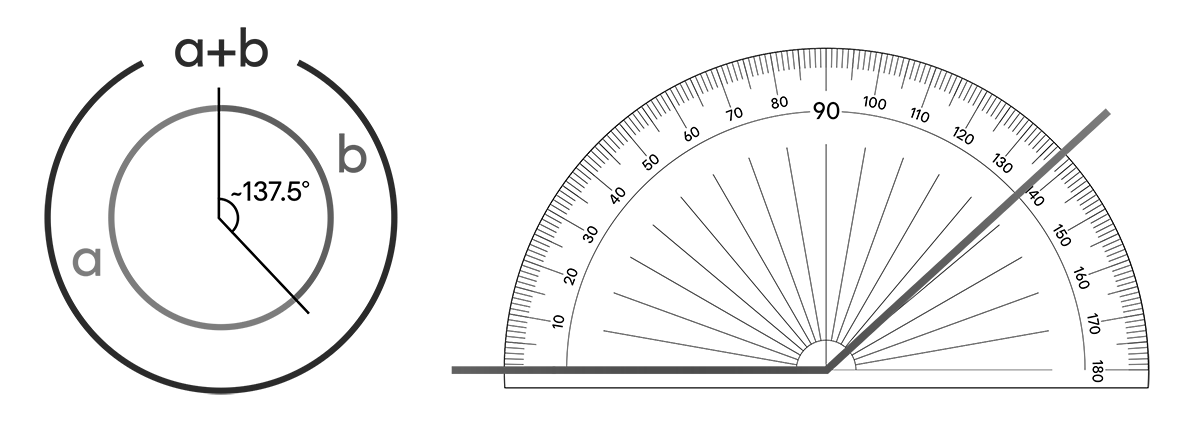
– Printed golden angle reference sheet (approximately 137.5 degrees) (page 41)
– Printed photos of different leaf arrangements (pages 43-45)
– Pre-cut petal and leaf shapes (optional: using printed petal and leaf shape template) (pages 47-49)
– Completed example of flower and leaf build
What You’ll Need:
– Pipe cleaners for stems
– Paper for petals and leaves (recycled magazines or newspapers, tissue paper will be easier to puncture, construction paper can also work with a little more effort)
– Double-sided tape
– Scissors
– A pen or toothpick to poke holes in the petals and leaves
– Optional: protractor (for measuring angles)
Watch out! Adult supervision is required if young children are using scissors and toothpicks.
Instructions (Step-by-Step):
1. Prepare your petals. Have participants cut out petals and leaves using the templates below or freehand. Petals don’t need to be perfectly identical, but similar shapes work best. Then use a pen or toothpick to poke a small hole near the base of each petal and leaf so they can easily be threaded onto the pipe cleaner stems.
2. Introduce the golden angle. “Have you noticed that flower petals don’t sit directly on top of each other? Why do you think that is?” Using the golden angle reference sheet, share how plants often place their petals and leaves by about 137.5 degrees, called the golden angle, so each has space and sunlight. This clever spacing, based on the Fibonacci sequence, naturally creates the spiral patterns we see in many plants!
3. Build your flower. Start with a pipe cleaner stem and thread the first petal onto the top. Keep the petal near the top of the stem and place a small piece of double-sided tape on its top near the base; this will help hold the next petal in place. For each additional petal, rotate it around the stem by roughly 137.5 degrees from the previous one and stick it to the tape on the previous petal to secure it. Continue until the flower is complete, noticing the spiral shape that emerges.
4. Add some leaves. For teens and adults, you can introduce four main leaf arrangements:
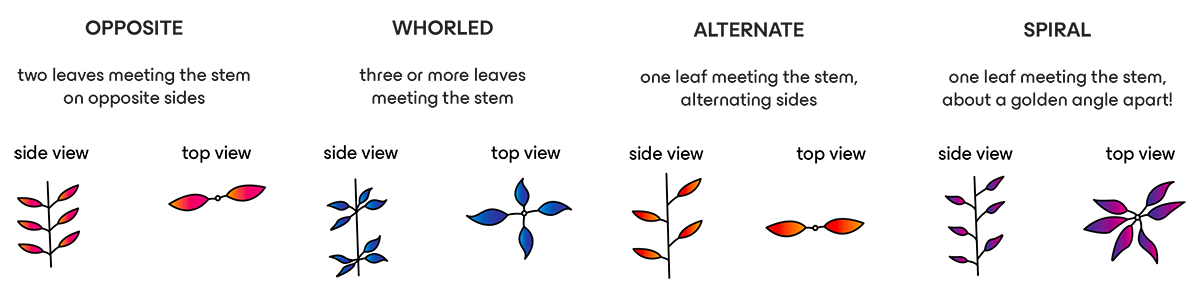
– Show photos of different leaf arrangements. “If each leaf grew in the same direction as the last, what might happen?” Leaves could shade one another, blocking sunlight. Spiraling avoids overlap and allows better growth. Share how the golden angle (roughly 137.5 degrees) spaces leaves and petals to avoid overlap and maximize sunlight.
– Invite them to choose either spiral or opposite leaf patterns to build along their flower stem, in addition to the flower they created at the top.
– Encourage experimentation: what happens if you rotate more or less? How does it affect overlap? “Can you see the spiral forming?” The pattern emerges naturally as each leaf is offset by the golden angle.
5. Reflect and share. Ask questions like…
– “We talked a little about how spirals help plants get sunlight, are there any other reasons why spiral patterns might be useful?”
– In a sunflower, each new seed sprouts from the center and moves outward. In order for the seeds to fill all the space around the center, each seed has to migrate outward in a different direction than the last one did. The angle that determines each new seed’s direction — the golden angle — helps them fill the space efficiently, packing as many seeds as possible into the flower head. Pinecones, pineapples and artichokes do something similar!
– “Why might plants use these patterns?” “Why might some plants deviate?”
– Nature approximates; small variations can still achieve efficiency. Different leaf arrangements may also be more or less advantageous depending on the environment a plant grows in!
Community Adaptations
Host a nature scavenger walk if flowers or plants are available.
Getting Younger Children Involved
– Provide pre-cut petals and leaves with small holes, along with colorful pipe cleaners for threading through to assemble their flowers.
Getting Teens and Adults Involved
– Provide protractors so participants can measure leaf angles and spacing, exploring how the different leaf arrangement strategies optimize sunlight and growth.
– Talk about how these patterns connect to biology, design and even architecture.
– Invite participants to share photos or stories of spiral patterns from their own gardens or travels.
Activity 5: Spinning Spirals
Exploration Goal:
Participants will explore different types of mathematical spirals and how proportional growth shapes natural and designed forms. They’ll see how curves that expand from a center point can create patterns that are both efficient and visually balanced, and how these spirals appear in motion.
Overview
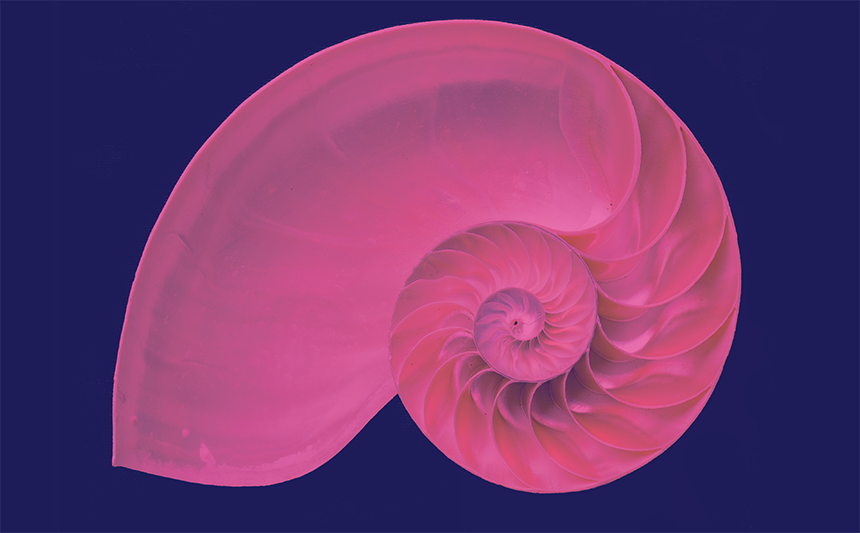
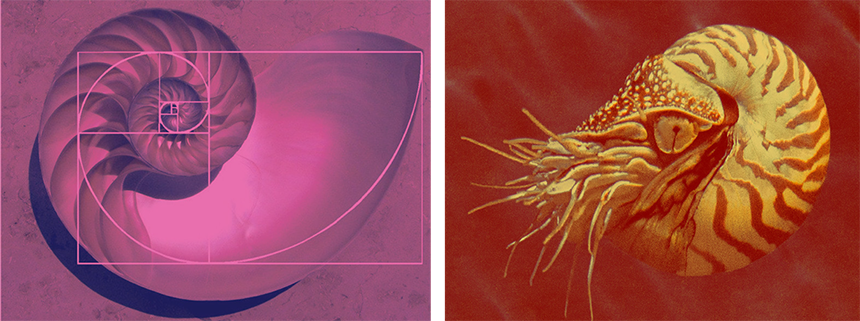
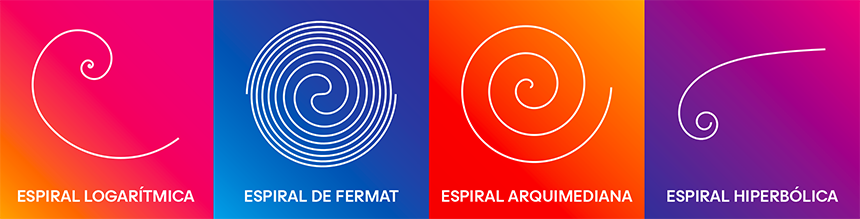
The nautilus shell is a natural wonder. While not a perfect Fibonacci golden spiral, the nautilus follows proportional growth that echoes Fibonacci patterns, creating a spiral that balances symmetry and expansion. Spirals are curves that start from a center point and move outward as they circle around that point. The golden spiral is a type of logarithmic spiral, one of the four most common mathematical spirals.
By cutting along spiral lines and threading string through the center, participants create a spiral that can spin freely in the air. Observing how the width changes in their spinning spirals visually reinforces the idea of proportional growth and connects their hands-on experience to abstract math concepts.
Math Concepts:
recursive patterning, ratio and scale, logarithmic spirals, real-world geometry, growth patterns in biology
Time:
25–40 minutes
Materials:
Prepare Ahead:
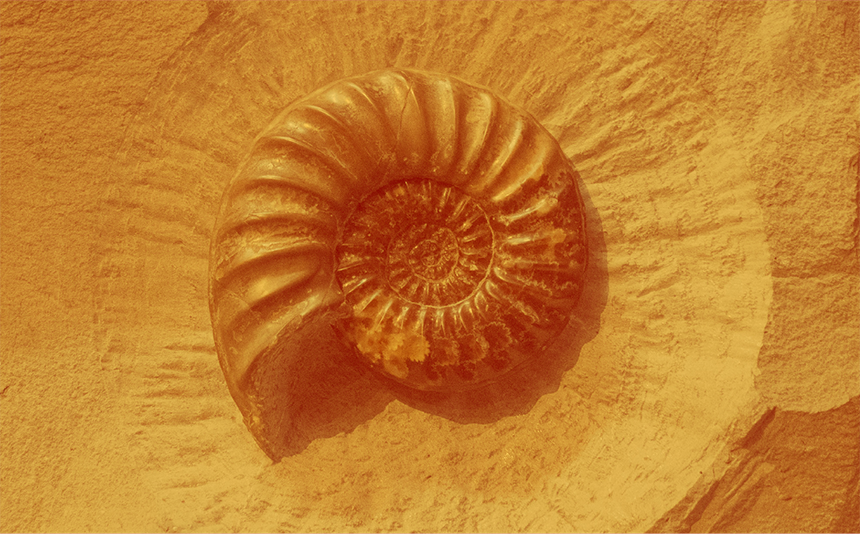
– Printed images of spirals (e.g., nautilus shells, ammonites, galaxies, fern coils) (page 55-59)
– Printed spiral templates (Fibonacci/golden, logarithmic, Archimedean) (pages 61-65)
– Example spiral hangings
What You’ll Need:
– Scissors
– String, yarn, or ribbon (at least 5 inches for each spiral)
– Color pencils or paints for decorating spirals
– Pencil, pen or wooden skewer for piercing holes
– Clear tape
Watch out! Adult supervision is required if young children are using scissors.
Instructions (Step-by-Step):
1. Explore the inspiration. Show images of nautilus shells or other spiral patterns in nature. Talk about how each new chamber in a nautilus is proportionally larger than the last.
2. Build the spiral. Give each participant a printed spiral template. Carefully cut along the lines of the printed spiral, starting from the outer edge and working toward the center.
– Depending on the number of participants, each participant could try making multiple types of spirals. Alternatively, different groups of participants could make different spiral types.
3. Decorate and define. Paint or color the spiral. Add patterns, textures or even write a message or short story along the spiral’s path so the design unfolds as it spins.
4. Observe growth patterns. While participants are working on their different spirals, invite them to notice the differences in the amount of paper or the width of each spiral as it moves outward. “Do some spirals start tight near the center and open up quickly, while others expand more evenly?”
“Which parts of your spiral take up the most space?” Link these observations to the growth factor of each spiral type.
– The growth factor just means how much bigger it gets at each step. For example, if a snail shell or a sunflower spiral is growing with a growth factor of 1.618, each part is about one and a half times larger than the part before it.
– Archimedean: grows evenly, like a coiled rope. Width between loops is the same throughout.
– Logarithmic: grows proportionally, so the width of every next part of the loop is a little bigger than the last in a steady pattern.
– Fibonacci/golden: The Fibonacci golden spiral is a type of logarithmic spiral. For every quarter turn it makes, the spiral grows about 1.618 times as large as the last — that’s the golden ratio!
5. Attach the string. Use a skewer or pencil to make a small hole in the center of the spiral. Thread a piece of string or yarn through the center hole from the top. Tie a knot or tape the string end on the back to secure it.
6. Spin and observe. Hold the spiral by the string and let it spin freely. Encourage participants to notice how the spiral moves. Explore where these spirals appear in nature, design, architecture, and science. Different spirals help us understand different kinds of growth. Some spirals show steady steps, some show growth that multiplies, and some help explain patterns in nature like flowers, shells, storms or galaxies.
– “Where can you see these spirals in nature or in the real world?” Archimedean spirals: cinnamon rolls, snail shells, climbing plants, spiral staircases. Fibonacci/logarithmic spirals: nautilus shells, sunflower seeds, pinecones, hurricanes, galaxies
Community Adaptations
Hang finished spinners from a clothesline or ceiling.
Getting Young Children Involved
– Provide pre-cut spirals so they can focus on decorating the spiral.
– Encourage them to paint or color each spiral turn in different colors to see the growth pattern visually.
– Turn the activity into a “spiral treasure hunt,” asking them to point out other spirals in the room or in pictures.
Getting Teens and Adults Involved
– Introduce conversations on why the Fibonacci spiral isn’t exact in biology but still appears frequently in nature.
– Highlight how proportional growth and motion are used in both natural and human-made structures.