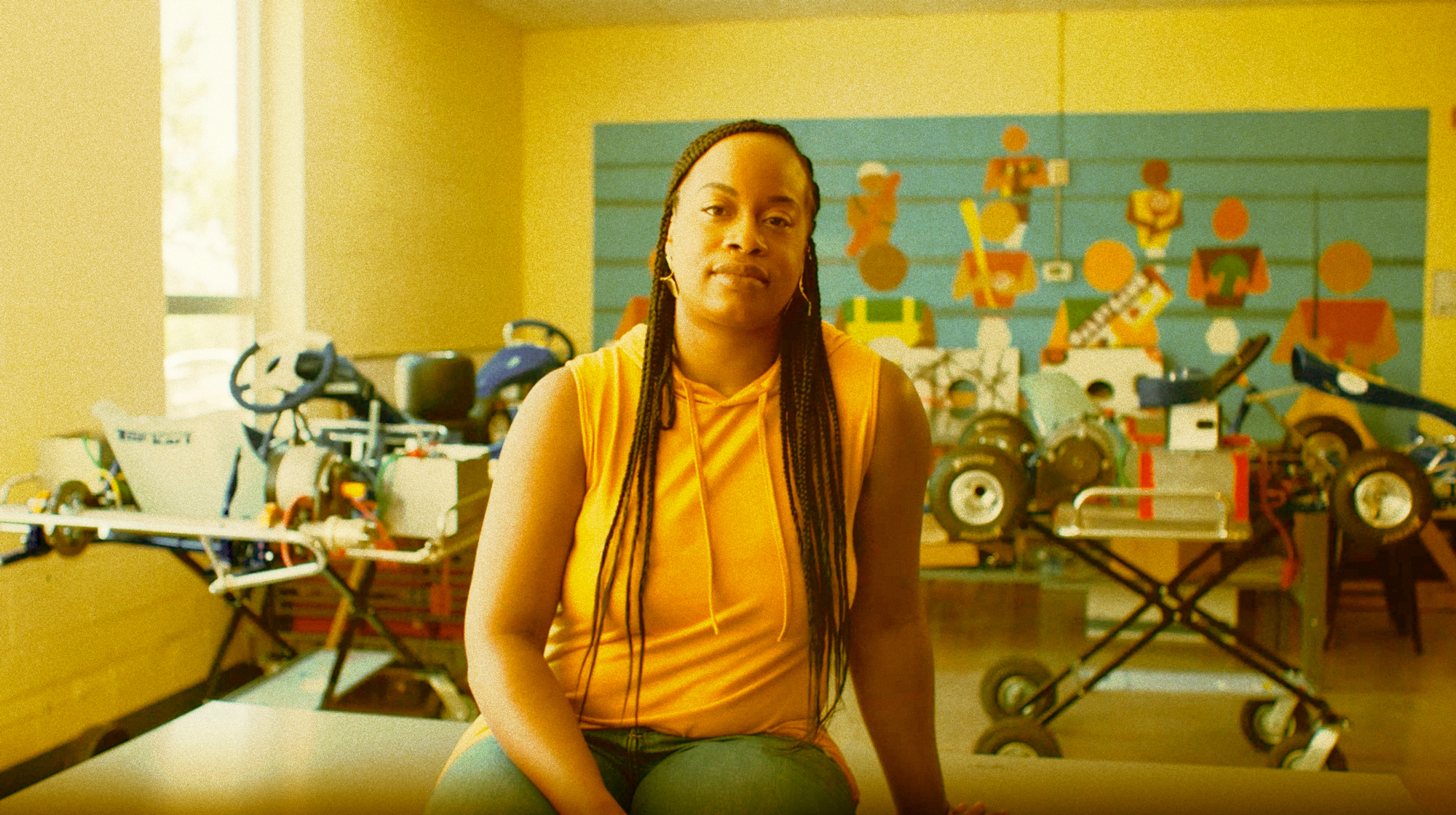
Math Ambassadors: Whitney Gaskins from The Gaskins Foundation
Whitney Gaskins has spent her career as a champion of culturally relevant and engaging STEM learning. After earning her Ph.D. in 2014, Gaskins went on to become associate dean of professional development and community impact at the University of Cincinnati’s College of Engineering and Applied Science, where she develops STEM outreach experiences for the school and the greater Cincinnati area.
In addition to her work at the University of Cincinnati, Gaskins founded The Gaskins Foundation in 2008. She and her organization have brought inclusive science engagement opportunities to places such as her church community, employing a range of approaches from hands-on experimentation to project-based activities.
While math was always part of the foundation’s programming, Gaskins saw an opportunity to go beyond numbers and explore how math “shows up in culture.” When a chance to develop an animated series around math arose, Gaskins — and her family — seized the opportunity.
The web series, supported by the Simons Foundation’s Infinite Sums initiative, is called Wesleigh, Waylen, and Waverly’s STEMulating Adventures — named after (and voiced by) Gaskins’ children. She and her husband play the roles of Mom and Dad. In each episode, the kids go on adventures where they meet important STEM historical figures and use math to solve challenges. In the first episode, for instance, the kids meet Ludwig van Beethoven and learn about the mathematics of music.
Gaskins also created content around the series, enabling children and their parents to continue to engage with math beyond the episodes through songs and other projects. Her ambition is for the series to positively impact how kids and their caregivers build and maintain relationships with math.
We recently spoke with Gaskins to learn more. The transcript below has been edited for clarity and brevity.
Thank you for your time, Whitney! Why don't start with you telling us a little bit about yourself, and what your relationship to math has been throughout your life?
My relationship with math is interesting because it doesn’t come naturally to me. Although I have a Ph.D. in biomedical engineering, math was not my favorite subject in school. I understood the utility of it, and I think that you can use math to solve some really awesome problems and to model how some really cool things in the world work. And so, because I understand its utility, I will grin and bear it. And then once I get it, I’m in there. So, you know how people think you have to be this natural learner of math? That wasn’t me — I didn’t hate it, I didn’t love it, I just understood how useful it was.
Can you tell us a bit more about The Gaskins Foundation?
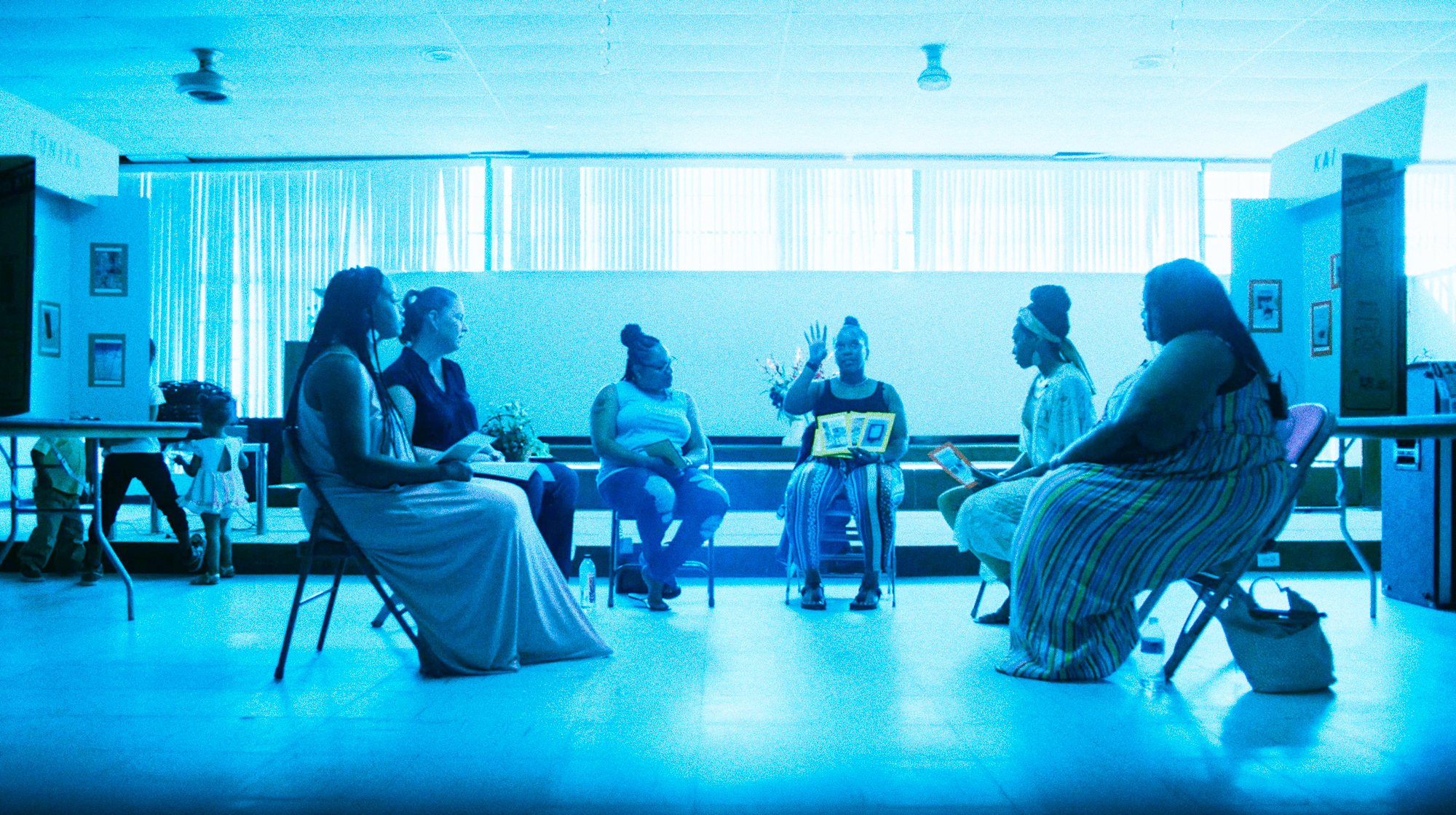
The Gaskins Foundation does a lot of contextualized learning in informal spaces. It looks different depending on which program you talk about, but we have two that I think are our signature programs. One is EPICC, where we empower parents and community churches to do STEM education in their home churches and in their communities. We have 25 sites in over 15 states, and all these church partners are doing STEM education in their own way. And the reason why I say it’s contextualized is because we build the curriculum that they want, not things where we’re like, “hey, do this.” They will send us pictures, and they’re like, “how does this work?” Then, we can build a curriculum to show them how it works. So, it’s beautiful to be able to really take in a community voice to build curricula that they’re going to care about and implement.
And how has The Gaskins Foundation been approaching math, as part of your partnership with Infinite Sums?
Math has always been a big part of what The Gaskins Foundation has done and continues to do because we understand the impact of numeracy. But we wanted to make sure people understood and appreciated math and how it works and really show them how math shows up in music, in space travel, in art, and even in the food that we eat and the products that we use.
We’ve developed an animated show where we are able to gather families’ attention — not just the kids. It’s been a beautiful thing. The series makes me smile because it’s modeled after my own children. The kids have a magic toy box, and they get transported to all these different places, and they meet these amazing people, both historical figures and modern figures, and they have to solve a problem — always with a math component — to figure out how to get home. It’s a beautiful way to tell a story and to preserve our history, so it brings in that representation. Parents are then able to have conversations with their kids about what they were able to see, about the people that they’ve met and the concepts that they’ve learned.
What have you learned by developing the series?
I feel like I have been transformed by this series because I think that in science communication as a field, most people think you’re trying to talk to adults. I’m just trying to talk to kids, and you can actually communicate really challenging concepts to kids. I think we underestimate the ability of kids to understand things, especially math, because I think we carry math trauma, and I think this is a good way of showing that you don’t have to be traumatized by whatever schooling you may have gone through. It actually is fun, and it is engaging, and we’ve been able to show that. I didn’t know that was going to be an outcome, but math is fun.
And can you tell us more about how your kids have been involved?
My kids are young, but they’re into it. My kids are very involved because doing a show, we have to go to the studio, you have the voice acting, and the writing room to do the scripts. And they’re a good test case. My son is 6, and my daughter is 3. They laugh and giggle at certain things, and we’re like, “OK, we hit it.” It’s probably because of them that we have an entire album that accompanies the show because we were trying to convey a concept and then it was like, “why don’t we incorporate more music?” So, they’ve helped transform the show in really big, beautiful ways.
What are you hoping kids and adults will take away from STEMulating Adventures?
For the kids in particular, because of how this show builds in representation, I hope that they can see themselves as people that are capable. I want them to learn the concepts that they are going over like fractions, decimals and patterns. I hope that they understand those concepts, but I hope they realize that the people that we feature are intentional, and that they could be one of those people. So, we’re hopefully affirming their identities in a way that they’re like, “oh, I can do this, too,” so that way they don’t self-select out of careers that need math.
For parents, I actually hope for the same thing, but I hope it brings conversations about it. I hope it just dispels the myth of how complex or complicated things are. I hope it makes them also realize they themselves are continuous learners.
Thanks, Whitney!
STEMulating Adventures premiered on Pi Day (March 14, 2026). You can watch the first episode in the series here.