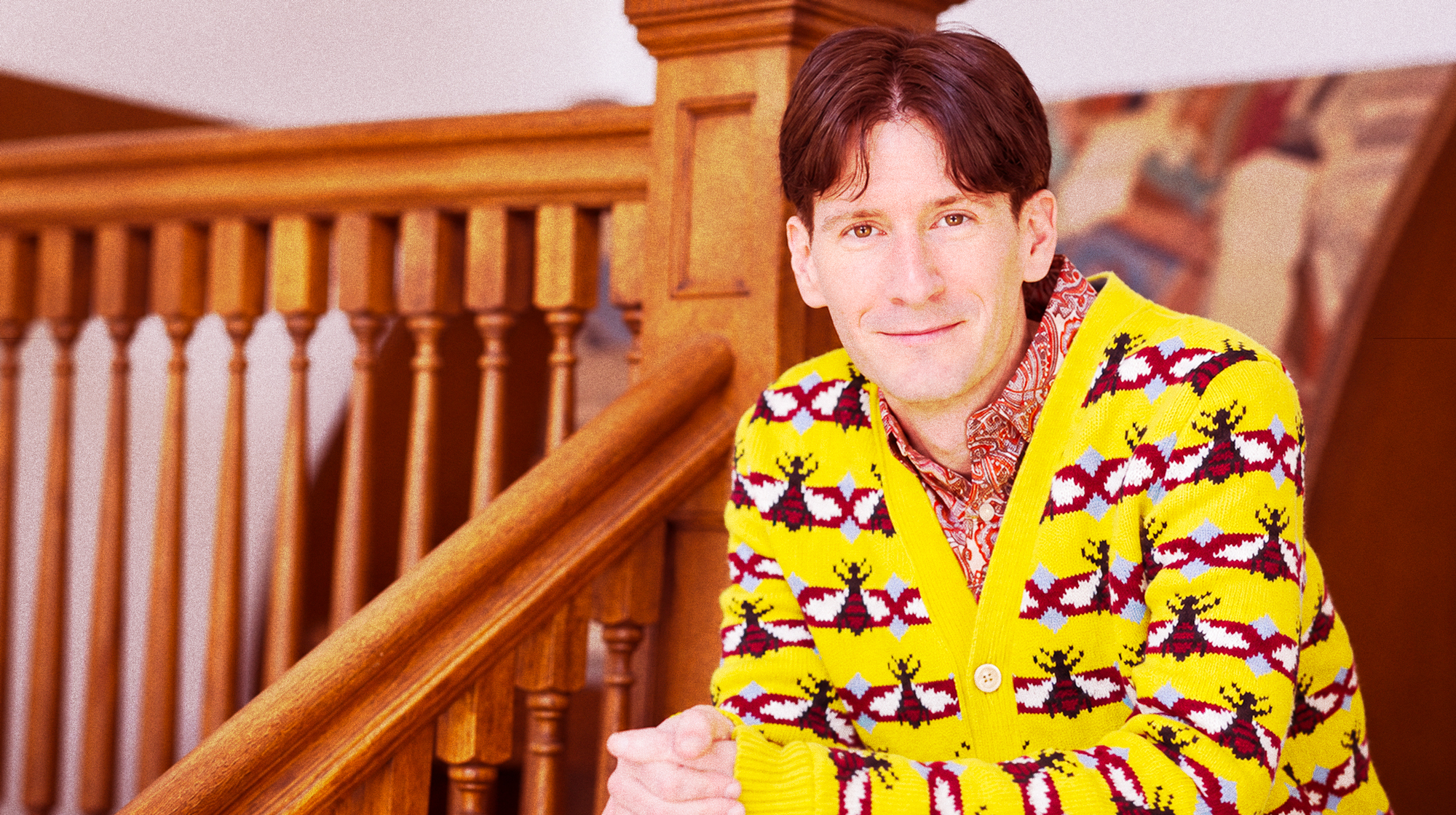
Math Ambassadors: Tyler Hahn From Cherokee Public Library
In Cherokee, Iowa, math can be found in some unexpected places: recipes in old cookbooks, pages of popular manga and even stars in a local planetarium. At the Cherokee Public Library, Director Tyler Hahn and his team use these points of connection to create opportunities for people of all ages to explore their interests, engage with their neighbors and discover how math shapes their day-to-day lives.
Through the Simons Foundation Infinite Sums national initiative, Hahn and his team have partnered with local science and math professionals to create programming that reflects Cherokee’s unique history.
Hahn is also one of 20 librarians from across the country participating in the Infinite Sums Association for Rural and Small Libraries Cohort, a learning community in which librarians regularly exchange ideas, share challenges and develop new approaches to math engagement. Much of the programming takes place around three celebratory dates: Pi Day, Infinity Day and Fibonacci Day. Each event is created to reflect the character of the community and would-be attendees. As the incoming president of the association, Hahn is also taking on a leadership role to help small and rural libraries learn from one another and build on their collective experience.
We spoke with Hahn about the library’s role in Cherokee, the partnerships behind its math programming and what he has learned from connecting math to the interests and traditions of his town.
The conversation below has been edited for clarity and brevity.
Thank you for taking the time to speak with us, Tyler! Could you tell us more about yourself, your role at the library and the community you’re based in?
I started at the Cherokee Public Library in February 2018 as the youth and special services librarian. I was doing a bit of a 180 with my career. During the COVID-19 pandemic, the library’s director resigned on the same day the governor shut down the state. I spent time as interim director, and after a couple of unsuccessful searches for candidates, the board asked me to serve as director permanently.
Cherokee is the largest community in our county, but it’s quite rural in its own right. Of our county’s population of about 11,000, just over 5,000 people live in Cherokee. As a rural community, the library plays an important role in bringing people together and providing access to resources and experiences that might otherwise be difficult to find. That’s something I’ve always valued about libraries, having grown up in a small town myself.
Can you tell us more about the role the library plays in Cherokee? What kinds of programs and experiences does it offer?
One of our first major initiatives in 2018 was a grant program called Future Ready With the Library. It was designed to connect middle school students to college- and career-readiness skills, with an emphasis on youth voice and choice. We wanted students to help shape what they learned and how they developed their interests.
We also have a community credentialing program. As people were relocating to the area, we learned that there weren’t many people with connections they could use as job references. So we worked with businesses to identify the skills they need in their workforce and created a program where, if you demonstrate proficiency in certain skills, we will write you a letter of reference.
Another idea we’ve really leaned into is community memory, as well as much of the culture that has been big in the community. Part of that has been women’s organizations or church groups that produce a lot of artifacts, like local cookbooks as fundraisers and, in some cases, local history repositories.
My predecessors have done a great job collecting artifacts of our community’s past, and they’ve led to some pretty neat programming not only about food but also about many of the restaurants that were in town. In a lot of cases, we have the very same recipes that these families remembered at gatherings, after football games and things like that. Over the years, we have actually been able to re-create those and supply those recipes to our community.
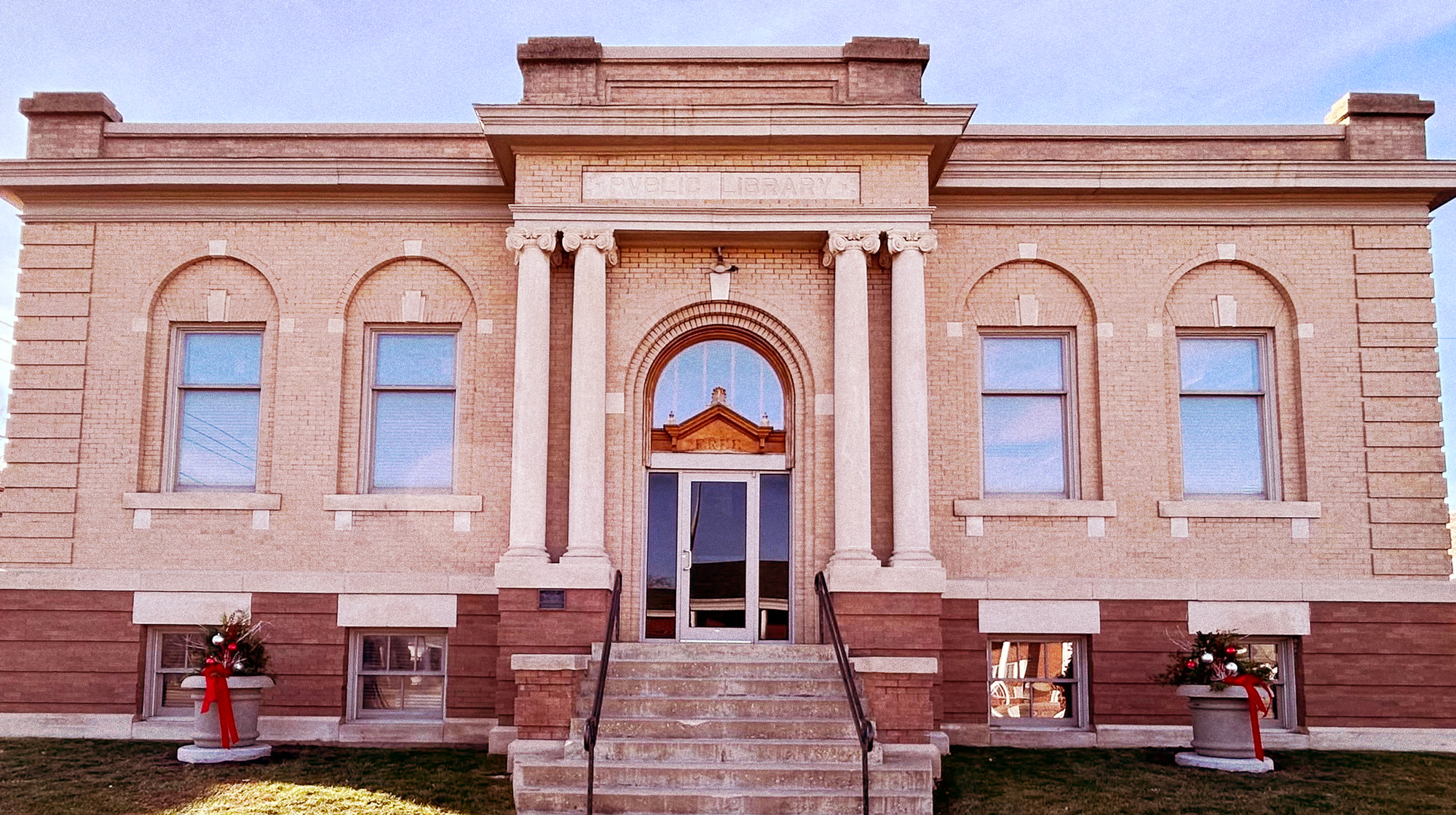
You’ve spoken about how important it was to have a library in your own life growing up. How does that shape the way you approach your work today?
Growing up in a small town, the library was one of the few places where I could find after-school activities that didn’t necessarily cost a lot or come with other barriers to participation. Everything was free, and I thought that was just great. That’s something I carry into my work today. Our foremost principle is co-designing with the community and giving people a voice and choice in what they want to see, learn and experience. I think it’s important to create opportunities for people to explore their interests and stay engaged and involved in their community.
What has your relationship with math been like throughout your life?
I started off school really liking math, but when algebra came into the picture, I didn’t have the best relationship with it. I felt I really had to pay for that as I got into college, and I had to work significantly harder because there was a lot of additional material to catch up on. Not only was I going through a statistics and methods sequence, but I was also trying to pick up calculus again, which, when you’re an adult with an adult brain, is a bit difficult. Throughout this program, though, I’m finding that my love of math is coming back, and I’m able to contextualize it in a way that works for me, my library and my community, and that isn’t as imposing or scary.
How did you approach bringing math into your library’s programming through Infinite Sums?
Math has been a really interesting pivot. Initially, my staff was a little fearful. There’s a lot of hesitation around whether math is applicable, fun or relevant. It can seem like this nebulous and arcane topic that’s all shapes and logic.
We knew, though, that a lot of the work we were already doing was based in math. In our cookbook collection, for instance, there’s quite a bit of context around doubling or tripling recipes. Our fire department cookbooks were designed for bulk cooking, so you can use them to explore the math involved in scaling those quantities to feed a family of four. That was interesting and something we highlighted during our programs, particularly for Pi Day. We were able to take something familiar and show people the math already embedded in it.
One of the exciting things about your work has been finding new ways to connect math with other parts of community life. Can you tell us about some of the programs you’ve developed?
We’ve been finding many ways to connect math with other things people are already interested in. We did a program at the library with our teen and tween audience. They’re really into manga, so Infinity Day really was a Jujutsu Kaisen and Satoru Gojo day. There were many slideshows, as well as guest lectures by tweens and teens about how manga and math fit together.
Within that manga in particular, there’s a lot of math involved, as well as the concepts we were covering for Infinity Day. We had even talked about one of the other characters whose innate talent was ratio, which I thought, man, this would go great with Fibonacci Day. It was great to work again in that space on what they’re interested in and to get them involved.
Your programming has also involved partnerships with local science and math professionals, including the local museum. What has it been like collaborating with these partners?
One of the amazing aspects of our job, especially in a small community, is that we have great relationships with other after-school educators and community partners. We wanted to show how this work could touch on all of those relationships. We have a great private museum and planetarium, the Sanford Museum and Planetarium, which has the third-largest archaeological repository in the state. It’s a completely random treasure, but a treasure all the same.
We also have a really great county conservationist and naturalist who is all about showing what science and mathematics look like in the tangible world. We also have several day care teachers and retired STEM educators in the space who are all about creating opportunities to keep people engaged and involved in the community.
Having these partners means we’re able to bring math and science into the tangible world in ways we might not be able to do on our own. They bring their own expertise, their own approaches to teaching and their own connections to the community. Through our partners, we’re able to create more opportunities for people to engage with math and see how it connects to the world around them.
Can you tell us about how you will be celebrating Fibonacci Day (11/23) at the library?
We heard a lot of good things about the food we had at our events, so we’re obviously doing food again. With Thanksgiving so close, we’re working with a local business to make Fibonacci sequence charcuterie boards. I think that will lend itself well not only to the time of year but also to where community interests are. As we’re able to talk more about the Fibonacci sequence, it’ll be a really neat way to connect math with something people are already interested in.
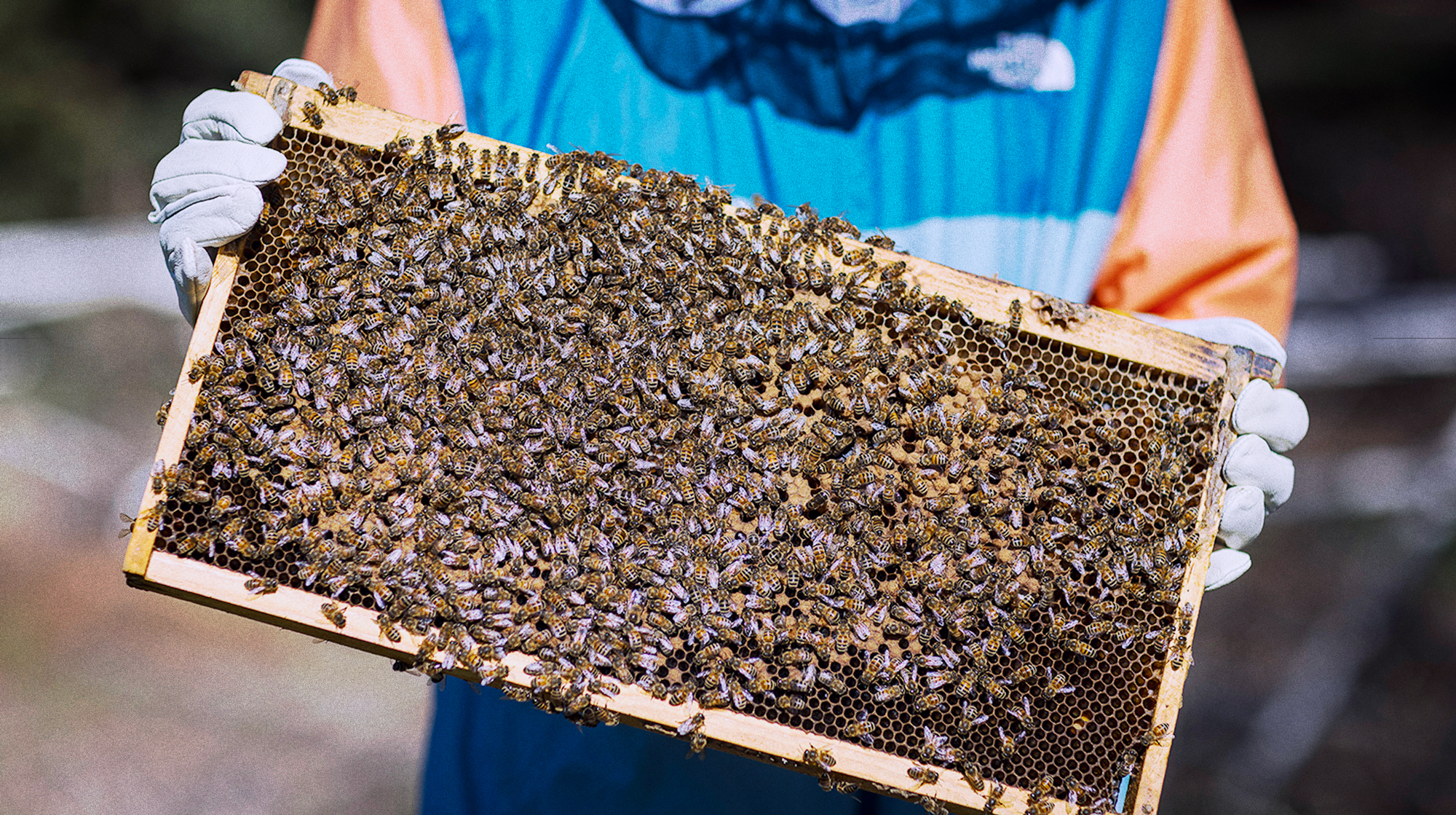
We’re also doing programming about bees. We had a swarm in 2021 that settled in the library trees, which really got me interested in beekeeping, to the point where I said, “I’m going to keep a little hive myself.” We’ve seen a lot of other hobby beekeepers develop within the community, and more people wanting to learn about native pollinators if they can’t keep bees themselves.
One of the cool things about bees in particular is that drones actually emerge generation after generation in the Fibonacci sequence. So we’re going to have a program on bees and native pollinators, led by our naturalist. We also have some pictures of frames up, and the idea is to “spot how many drones you can find in this frame.” It’ll be a nice bit of passive programming that we’ll have up through November. I think that’s what makes Fibonacci Day fun for us. We can take something like the Fibonacci sequence and connect it to things people are already interested in. It gives people a chance to engage with math in a way that feels tangible and connected to the community.
What has it been like to be part of the Infinite Sums Association for Rural and Small Libraries Cohort (ARSL) and learn alongside the other participating libraries from all over the country?
That’s one of the really neat things about small and rural libraries: we’re all so vastly different. Each of our community and governance contexts is unique. I feel like the only thing I can do with confidence is talk about what worked for us and what we learned from that. The Infinite Sums ARSL program is really well shaped. There’s a diverse cohort of librarians who were able to connect with one another every month to workshop our ideas, as well as fellow concerns or wonderings about mechanisms. These were practices that looked promising to us, but, like all things in life, your mileage may vary.
Can you talk more about your new role as the incoming president of the Association for Rural and Small Libraries?
ARSL is an amazing organization. The state library association is geared toward larger urban libraries, and I was in a small library without peers to learn from. We talk about youth near-peer mentorship, but it’s just as valuable when you’re a young professional.
I love continuing to curate experiences like the ones I had for other members. ARSL is a darling within the library world, and I want to lend my voice to that continued good work.
What ambitions do you have for this program moving forward?
One of my ambitions is to keep this program running. I’ve been talking with our local museum. They’re planning a multi-day digital arts festival that really touches on fractals next year. So we’re really working on continuing that good work, and I’m looking forward to that, and to how we can incorporate these three math holidays into our programming every single year moving forward.
More than anything, I hope people see that math is already part of what they love. As librarians, we tend to joke, “Oh, I went into books because I don’t really like math.” But a lot of what we do day to day is math-related, from the recipes in our cookbooks to the manga our teens love. I want our community to feel that math isn’t imposing or scary, and that it’s something they can share with one another.