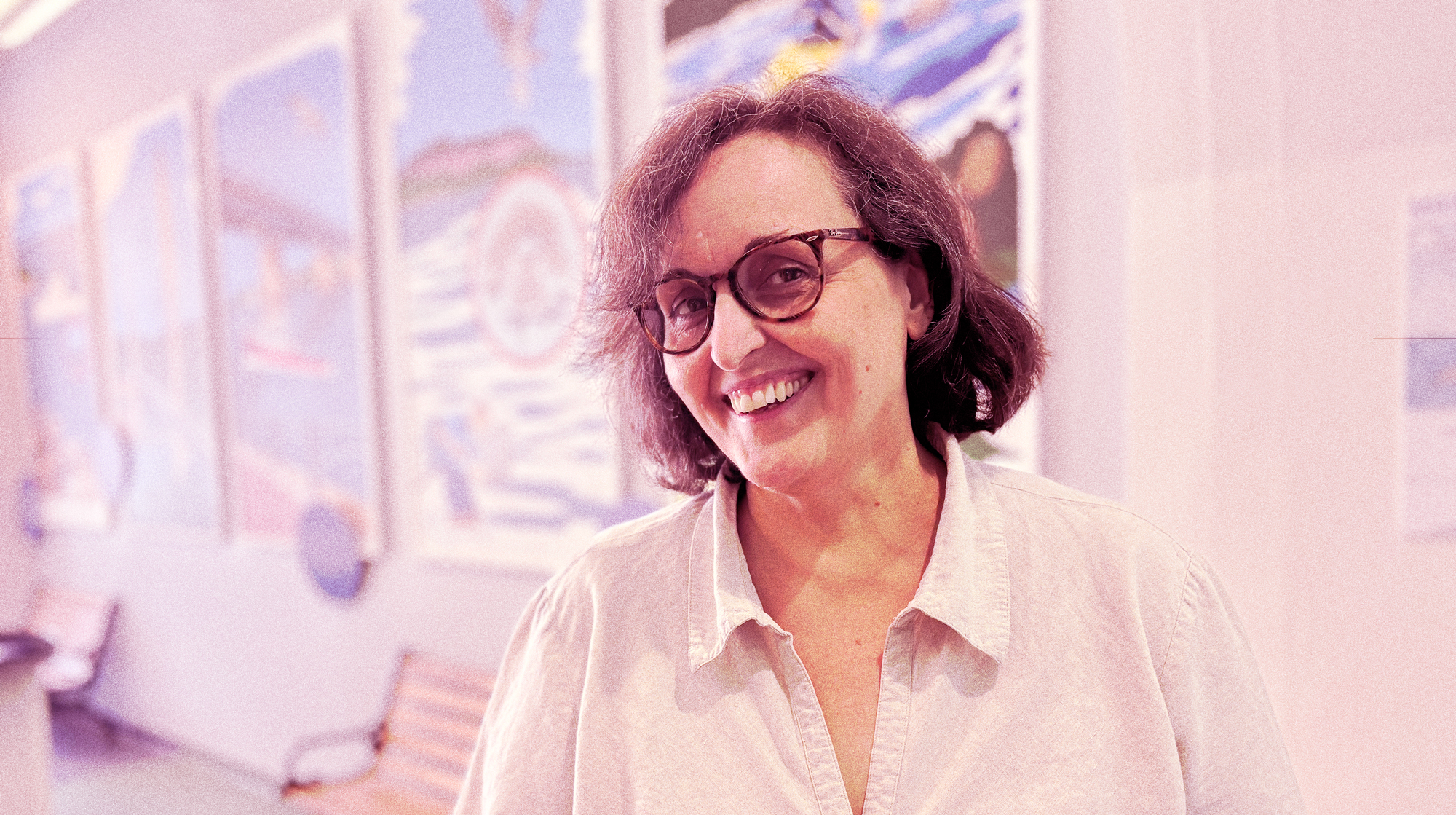
Math Ambassadors: Trudi Plummer From the Maine Discovery Museum
Along Maine’s Downeast coast, you’ll find fern forests, a lighthouse-dotted coastline and clams by the bushel. While these are all part of everyday life in the region, the role math plays in each is perhaps less obvious. Gertrude “Trudi” Plummer and her community partners have come together to co-create programming that helps Mainers see math as part of their everyday lives.
In Bangor, Maine, the work is being led by the Maine Discovery Museum, a children’s museum with three floors of interactive exhibits that invite visitors to explore science, nature, geography, literature, music, art and anatomy. The museum partnered with the Maine Seacoast Mission EdGE Program and mathematician Ioan-Augustin Chioar at the nearby University of Maine to design community-centric math programming inspired by the state’s ecology and traditions.
This effort is part of Meaningful Math, which is supported by the Simons Foundation’s Infinite Sums initiative. Led by The Franklin Institute, Meaningful Math brings together museums, community-based organizations and math experts to co-create local math programming that highlights the beauty of math and fosters curiosity.
A key driver of this effort is Plummer, the Maine Discovery Museum’s director of education. Together, the partners developed a series of interactive math trails. These trails connect math concepts like counting and fractions to familiar local experiences such as clam harvesting and packing wild blueberries to sell at local farmers markets.
We recently spoke with Plummer to learn more about her journey from formal to informal education, the co-creating process and what she hopes families will carry with them as they travel along the trails.
The conversation below has been edited for clarity and brevity.
Thank you for speaking with us. Can you start by telling us more about you and your role at the Main Discovery Museum?
Thanks for having me. I started as a formal educator in Germany and taught at a little mountain school in Bavaria for a few years, then landed in the middle of informal education in the United States. I’ve been working at the Children’s Museum since the year it opened, so my 25th work anniversary is coming up in August. I’ve been here a long time.
What’s always been near and dear to my heart is science literacy, and I love the hands-on aspect of children’s museums. Because Maine is the only state that does not have a science center, I was also privileged to be part of our pivot towards STEM education, when we expanded outside our four walls. Most of our in-house programming is now exclusively STEM-focused. It’s the perfect world for a consummate educator who is also curious about pretty much everything. I basically get to run my very own fun school in the museum.
And what has your relationship with math been like throughout your life?
When I was a child, I loved geometry, and later physics, because I was a visual learner. I’m also an artist. And in geometry, spatial thinking in 3D and turning objects in space was a lot of fun. Everything else, not so much, because they felt like a completely separate thing. I had no idea that it was part of my everyday life and part of my art to an extent.
So we were at a respectful distance, math and I, until I landed here in the informal education space. I realized how much I could bring the M into STEM and make it a little silly and goofy and fun and accessible. For example, we have an elephant ear at the museum, so children can lie on the ear hide to see the scale and then, from the ear, measure out the whole elephant. Or they take a string, knot it in meters and measure out the length of the different whales in Maine. When I saw the children responding to it with giggles and fun, I realized that you don’t have to have this sort of awkward relationship with math where it feels like it doesn’t have anything to do with you.
What made you and the museum want to be part of the Meaningful Math Program?
I lean heavily into the science part of STEM. I also now love engineering. We have a very good relationship with the College of Construction Engineering at the University of Maine, which has a very good school-to-job pipeline and wanted to expand their reach to younger people. So engineering has already been brought up to the level of where we teach science. Technology is also being brought up right now because we have robotics and all these different things. But not math. Math was something where you had to be like, “oh yeah, we should probably put a little math in there.” Or maybe the kids can just use a ruler in this activity. So we saw that the Meaningful Math Program could be a beautiful community-led project where we can really highlight and feature all the different aspects of math.
And then, when I get excited about something, I get really excited about something, so I bought my Algebra for Dummies book and started YouTubing my way through all the different fractals and fractions and the different Fibonacci sequences. I also started to look into math engagement done by artists and institutions like the Simons Foundation. It motivated me to get kids just as excited about a sequence, formula or pattern as they are about seeing a live snake at a program.
Definitely. And we'd love to hear more about the community-based organizations that you've teamed up with.
I knew who I wanted to work with because I’ve worked with the Maine Seacoast Mission’s EdGE program for over 10 years now. I’ve been to all of their campuses. I know the children, I know the families and I also know some of the barriers and hurdles to accessing enrichment in that area.
The Seacoast mission works in the Downeast area of Maine, which is near where traditional industries are dying because of the effects of climate change and new, emerging industries. We’re just seeing the beginning of biofuel rockets, offshore wind energy and wood composites, and those are heavily science-based industries.
So number one, we know that we need to get the youth excited about science-based opportunities that are available to them and show them a pathway. And we need to remove some of the trepidation from the parents.
So the Seacoast mission is also a long-standing provider in the area. They have a food pantry, and they shuttle youth from the outer islands onto the mainland a couple of times a year to bring them to the university to show them the bigger world. We have a very trusting relationship with both them and their families and we align on goals for the community.
I know that an important part of the program was identifying partner needs, local interests and values to create this math program very specific to your community. How did you go about doing this? Was there anything that surprised you while doing so?
Yes, and I think not just me, but also the EdGE team. A lot of our partners are used to a very linear collaborative process, a very one-sided relationship. It was quite a process to loosen this up in the co-creation model that we were using. This was a much deeper level of exploring what the community at large really needs, not just “we need a summer program for our children.”
We had our first community event with volunteers who were not super comfortable with math. None of them knew who Fibonacci was or what Fibonacci sequences are, but they could all recognize them. It was an eye-opener for them — that they’ve been engaging with this particular phenomenon all their lives, it just didn’t have a name. They didn’t realize that it was math-based, and that math is like this underlying secret code that makes them perceive things as beautiful or organized. And they were able to talk to the kids about it at the next event.
I’m very excited and curious to see what conversations we’re going to be having on the trail. I’ve learned through this process to keep a completely open mind.
Part of the Meaningful Math program is including local math experts. Can you share a bit more about Ioan’s role in the project and how the partnership came about?
Ioan is a mathematician and physicist, part of the Frontier Institute for Research in Sensor Technologies at the University of Maine, with a specialty in nanomagnets. He’s very relatable and also a very good communicator. Ioan had never been to the Downeast area where we are working, so for him, it was just great to see this part of Maine and what life was like.
He has a little bit of the mind of an informal educator because he was already doodling and scribbling and drawing while we were in the middle of the workshop with the community members from the Seacoast Mission. It was such a wild journey to land on the three installations for the math trails. For example, we were having a conversation about volume during the workshop, and that’s how we ended up asking questions like, “How do you pack spheres into a cubic container?” and “What’s the best way, especially if there’s a weight component?” That area of Maine has the world’s largest wild blueberry producer cannery. So you can’t pack them too deeply because they’ll crush each other. But you also have to, for the reason of economy, pack your blueberries in the most sensible way. So we started asking questions like, “Should you use round containers? Should it be a cubic container?”
So Ioan’s mind was going down that rabbit hole to find ways to illustrate the math ideas we were all talking about. I liked how his mind worked, and it was really exciting to work with him.
Can you walk us through the creation of the math trails and how you all landed on this idea?
It started as a wild and woolly idea. We focused on what was important to Maine — nature, the history of the industries, sports and the practicality of what is going on in peoples’ lives. From there, we landed on a math trail — a nature trail that features a series of touchpoints where people could interact with math activities that connect back to these familiar aspects of Maine.
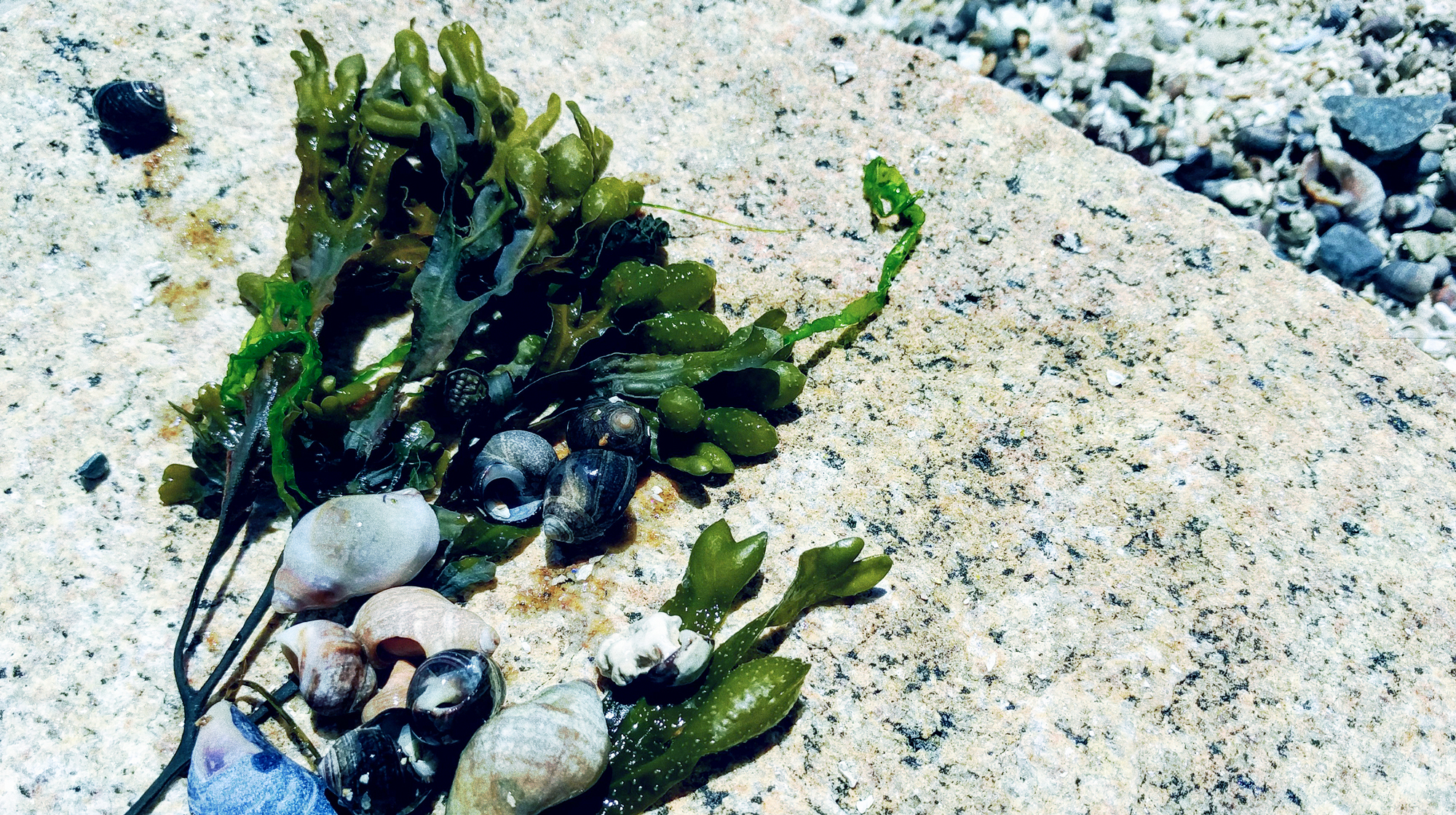
The first idea for a touchpoint in the trail that we were excited about was the abacus because it allows kids to explore counting large numbers in counting volumes. The concept is something the kids are very familiar with already — clams are counted in bushels, and bushels are determined by the size of the clams, which have different weights and sizes in their life cycle. One of the community volunteers brought their family clam roller to the activity, which is a basket where you put the clams in, shake them in water to get the sand and dirt out, and then can sort the clams.
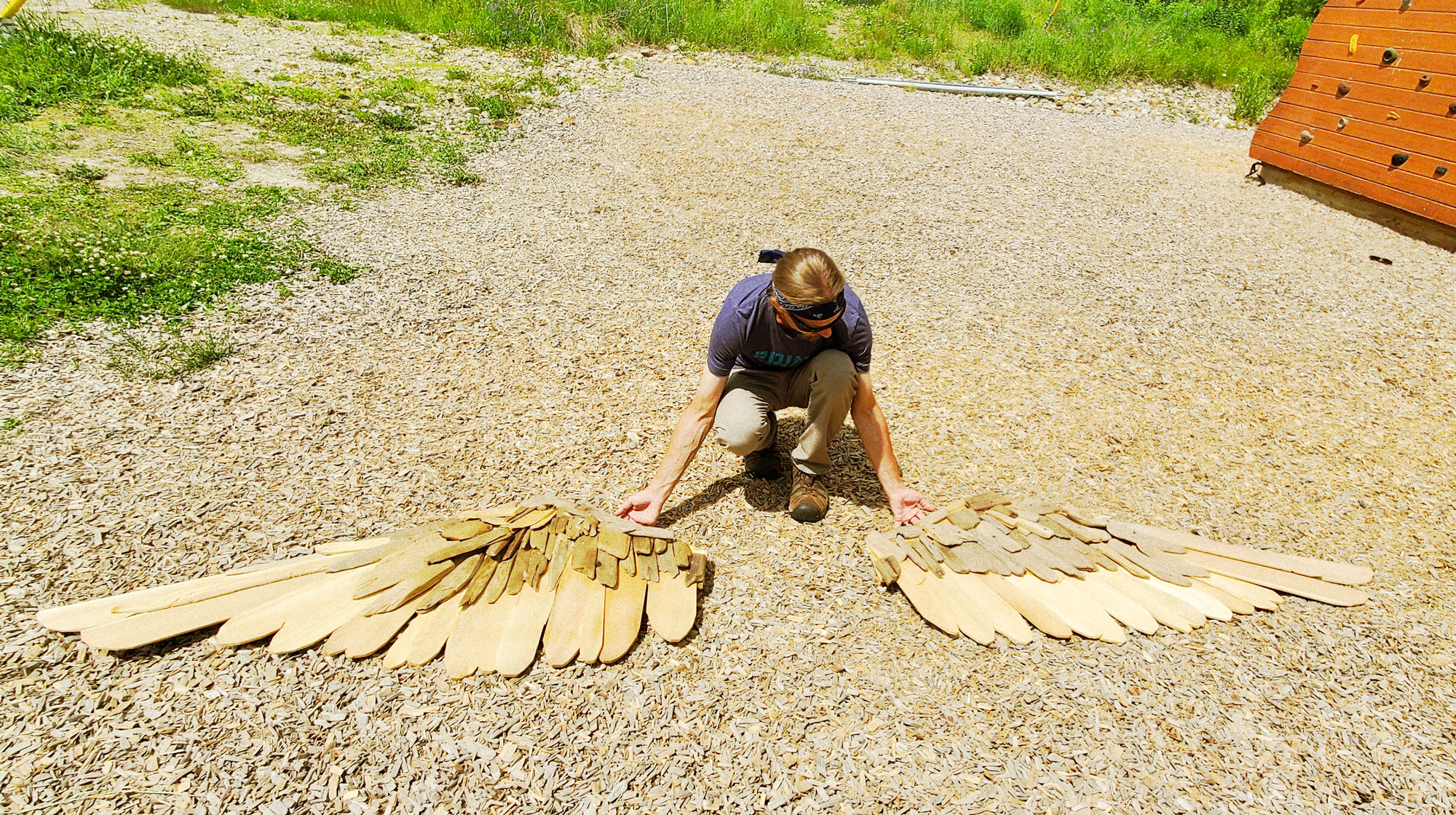
Another idea was inspired by the Fibonacci spiral found on local fern fronds unrolling. Everybody harvests ferns in the springtime and eats them, so they are familiar to the community. We expanded this concept to Fibonacci wings, in which the Fibonacci sequence appears in the structural growth of bird wings. I have now built the bird wings out of driftwood. Birds are inherently interesting and beautiful to all children, so we figured we could do something that lets them observe this phenomenon.
So there were quite a few discussions that took place and some pretty interesting, very deep math discussions about what is and isn’t the content that we’re trying to showcase, and that’s how we landed on highlighting these activities along the trail.
What do you hope for families, groups of friends and anyone who comes to engage with the math trail to take away from their experience?
That goes back to me being a consummate informal educator, because our guiding tenets are to expose, engage, and excite. I’m hoping that when families go on trail hikes, which is a very popular thing families do all the time year-round, and right there in the middle of the woods, looking out onto the ocean is a stone abacus, inviting them to count bushels of clams. And it stops them in their tracks and gets them thinking about why it’s there, what it is and what it means.
My hope is that the families understand that math is not just about homework or worksheets, and that they allow themselves to experience joy about the beauty of math. I also hope they realize that it’s part of almost everything in their everyday life, from their emotions to what they perceive as beautiful and to the practical solutions to everyday life problems. The math is waiting for them, sitting quietly under the surface, just waiting to be discovered and spark conversations and connections. I hope they are excited to have discovered something new and to have done it with their kids as a family.