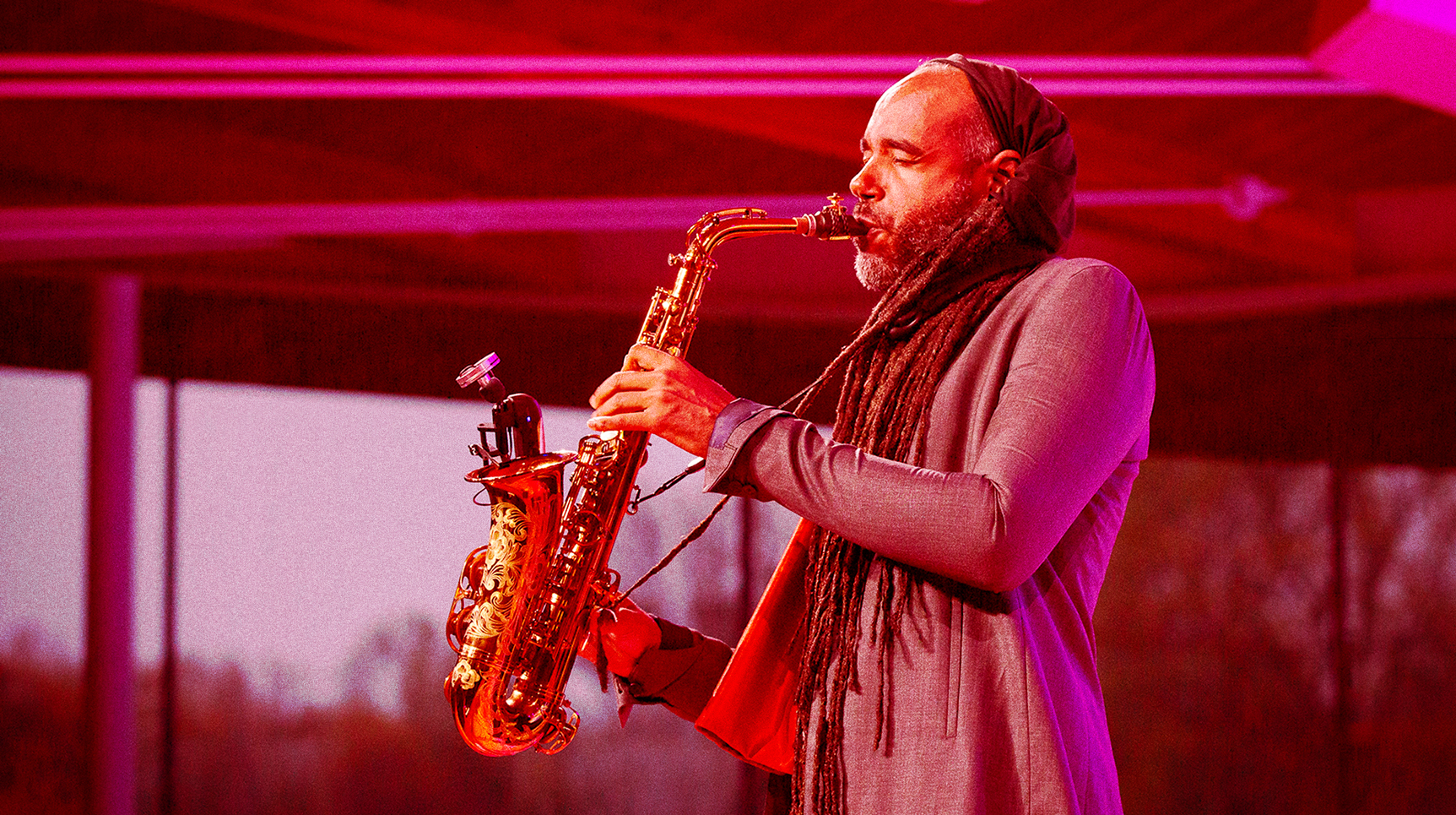
Math Ambassadors: Marcus Garrick Miller
Marcus Garrick Miller lives and works at the intersection of math and music. A renowned saxophonist who has toured with Jon Batiste and opened for the Rolling Stones, Miller also studied math at Harvard University and has spent years thinking about how patterns, improvisation and abstraction connect across his two passions, and how that interplay can be a source of inspiration. Having seen firsthand how often people feel daunted by math, he is driven to create experiences that allow more people to encounter math beyond traditional academic settings in ways that are grounded in curiosity and wonder.
One result of that drive is a performance called Beauty and Logic: part live concert, part conversation. Joined by a live band, Miller weaves original compositions with witty dialogue to invite audiences to see math in a different light and to explore what’s possible in music when it’s shaped by a mathematical imagination and vice versa.
On Pi Day (Saturday, March 14, 2026), Miller and his band will perform Beauty and Logic at Night in the Library: The Philosophy of Mathematics, a partnership between the Brooklyn Public Library (BPL) and the Simons Foundation’s Infinite Sums initiative. Now in its 10th year, this year’s event will transform the BPL’s Central Library Grand Army Plaza location into a free overnight festival of ideas featuring panels, performances and screenings that explore mathematics alongside music, art, nature and more.
We recently spoke with Miller about how he brings math to life through music and what he hopes people will carry with them from this year’s Night in the Library event. The conversation below has been edited for clarity and brevity.
Thanks for speaking with us today, Marcus! Could you tell us a little more about yourself and what your early relationships with math and music were like?
Marcus Garrick Miller: Sure. I actually have a really cool story about this! One of my earliest memories is my dad playing Philip Glass’s Einstein on the Beach. There’s a part where the choir counts in harmony, and that stuck with me. My interests in math and music grew alongside each other but didn’t really intersect at first. My dad, an accountant, emphasized numeracy, meaning no calculators until seventh grade, and would sometimes show me things like net present value calculations. At the same time, he was an avid music fan and amateur saxophonist, and he gave me my first lessons on his old horn that was sitting in the attic. By fourth grade, I was playing in the school band and got extra lessons because the director thought I was gifted.
Even now, as a professional musician, I stay curious about math and physics. That curiosity led me to the National Museum of Mathematics in New York City, where I started a program connecting musicians and mathematicians to explore parallels between our disciplines through conversation and performance.
For me, math and music aren’t the same thing. They don’t translate directly into one another, but both fill me with awe and joy. In each, there’s a creative, problem-solving space where I can explore ideas deeply, whether it’s cracking a conceptual math problem or experimenting with harmony and composition. Sharing that experience with others felt natural, and I wanted to make a space where people could enjoy it, too.
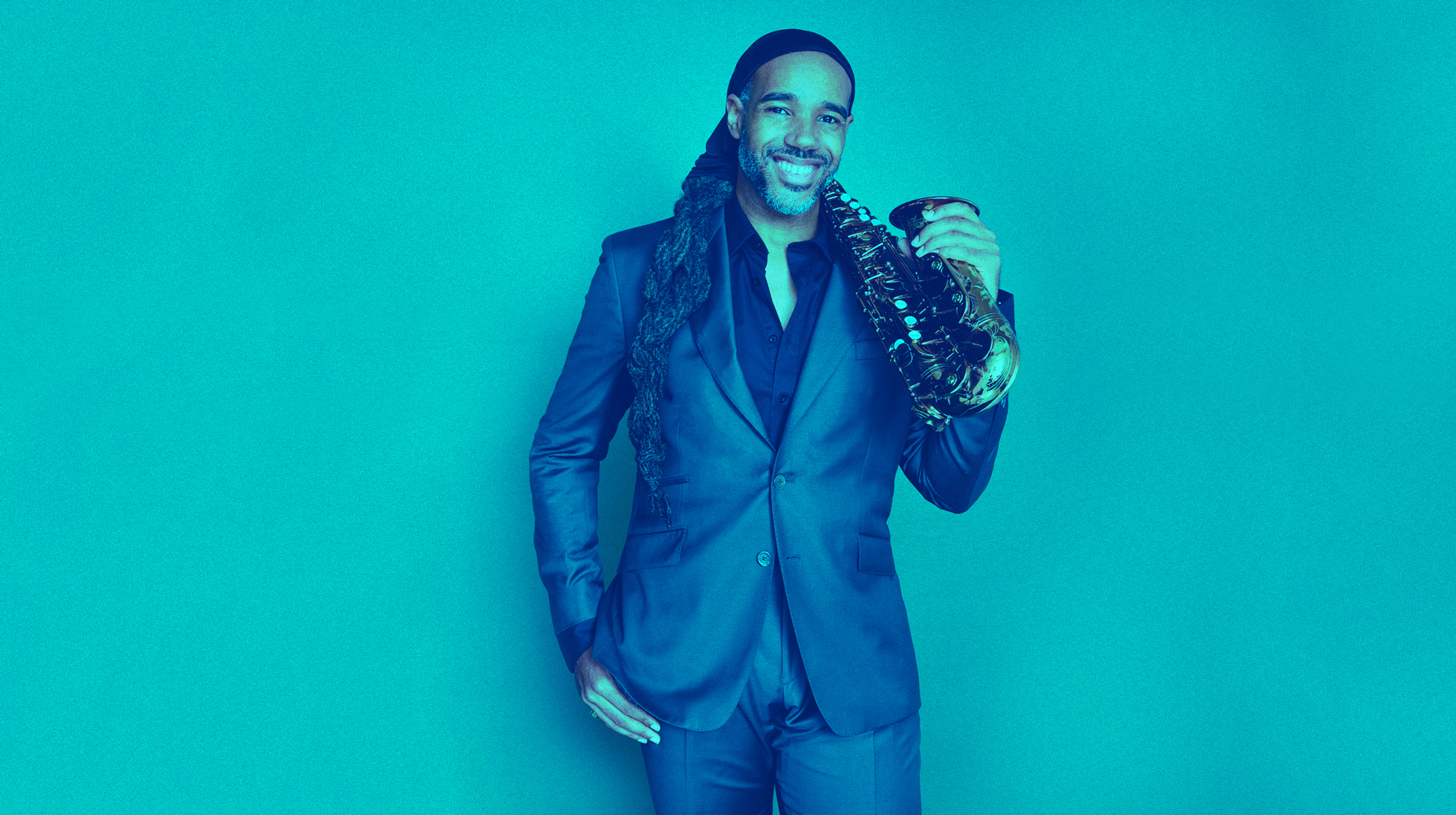
You’ve been bringing people together around math and music in new ways for a while now. Can you share more about what those early experiences looked like?
Marcus Garrick Miller: I started developing a program called Beauty and Logic at Grace Farms, an 80-acre cultural and humanitarian center in New Canaan, Connecticut. I was building on the same idea: blending music and math together. I combined live music with demonstrations that really captured people’s attention. One favorite was a Chladni plate, where I would sprinkle sand on a vibrating plate, control the sound frequencies with my phone, and then let sand form intricate patterns. It’s a beautiful way to visualize how frequencies and harmony work.
Another standout moment was a program I led with Bobby Sanabria, a leading expert in Latin music, and Manjul Bhargava, a Fields Medalist who also plays tabla. Andrew Atkinson, then the drummer from Hamilton, joined as well. They explored rhythm using syllables, which is a system central to Indian music that trains your mind to think rhythmically even without a drum. They played with polyrhythms, subdividing beats and layering meters. Seeing Indian music, Latin music and jazz fusion converge in a conversation about rhythm, culture and math was truly inspiring.
There are so many fascinating connections between math, music and culture here. How do you bring these kinds of connections to life in your performances today?
Marcus Garrick Miller: The goal with the Beauty and Logic performances is to convey a sense of awe. Some connections are practical, like between quantum mechanics and technology, while others are more thematic, like parity and sonata form. You don’t necessarily need to build anything from them; they can simply be different ways to appreciate and experience these ideas.
When you explore these connections enough, you realize how beautiful and humbling the world is. Sharing that with others is rewarding, and it’s an opportunity to expand your own mind, test your limits and grow intellectually. It’s satisfying for me, and I hope it’s enjoyable for the audiences I perform for, as well.
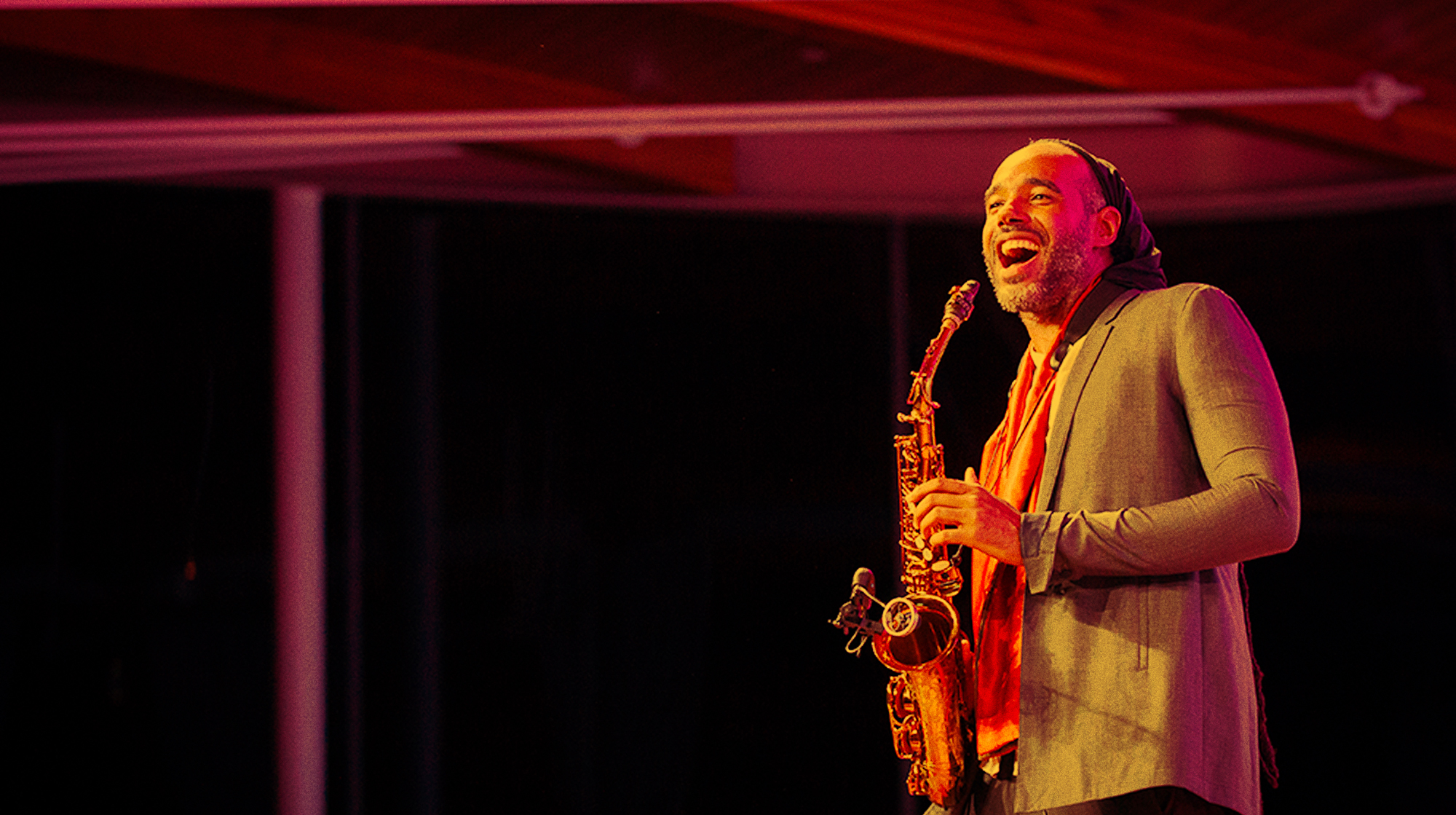
Who usually ends up more surprised by the combination at your Beauty and Logic performances: people who came for the music, or people who came for the math?
Marcus Garrick Miller: Great question. By now, most people know they’re stepping into something that combines math and music, so it’s rarely a shock. Math lovers are often just pleased to see ideas they care about show up in new contexts. Music lovers and curious audiences, though, are often really excited to see something familiar become connected to math, which can feel abstract or unrelatable at first.
Math carries a special quality: It’s permanent, timeless and part of the fabric of reality. Even people who struggled with math in school can be amazed when they see it reflected in music or other parts of life in an enjoyable, relatable way. The key is showing that these connections aren’t about proving someone wrong or flaunting knowledge — they’re about revealing deeper patterns that spark curiosity and wonder, even for people who don’t usually think of themselves as “math people.”
This makes me think about the upcoming Pi Day event at Brooklyn Public Library which will center around the philosophy of mathematics. What excites you about performing at an event like this?
Marcus Garrick Miller: I’m really excited about it! For this event, I think this kind of inquiry is especially important today. As AI becomes more prevalent, it’s easy to outsource memory, reasoning and knowledge work. If we’re not careful, skills like doing math by hand, following or producing mathematical arguments, imagining music or composing by hand could fade. That would be a real loss. Historically, tools like calculators have boosted productivity, but they’ve also coincided with declines in math skills for some students.
What protects these faculties is culture. Actively valuing the ability to think, reason and imagine. Being able to hear a composition in your head, perform mental arithmetic or work through a proof may seem old-fashioned, but it trains the mind in ways machines can’t replace. Part of my hope with this event is to share the beauty and value of these skills, show why rigor matters, and open the door for anyone interested and curious to learn more.
That leads perfectly into my final question. For the people who attend this event, what do you hope they take away, especially when it comes to broadening how they think about math?
Marcus Garrick Miller: I want people to feel a sense of awe. Math can make you feel very small, but in that smallness, it opens a sense of possibility, like looking up at the night sky or a mountain. I hope they experience that awe through mathematical ideas, and through the deep connection between something familiar, like music, and the broader world of mathematics and intellectual thought.