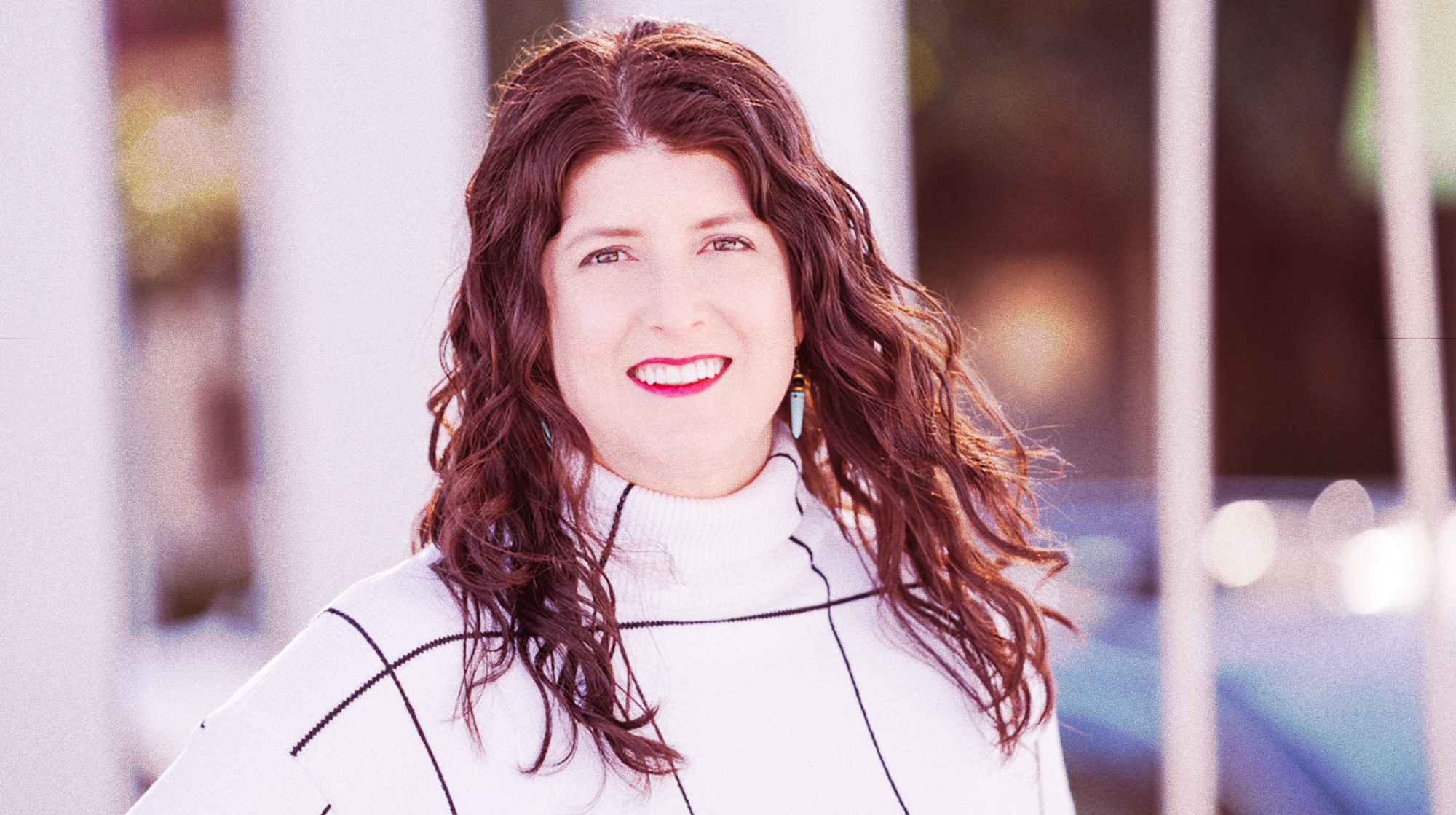
Math Ambassadors: Elizabeth Michael From SoMa 501
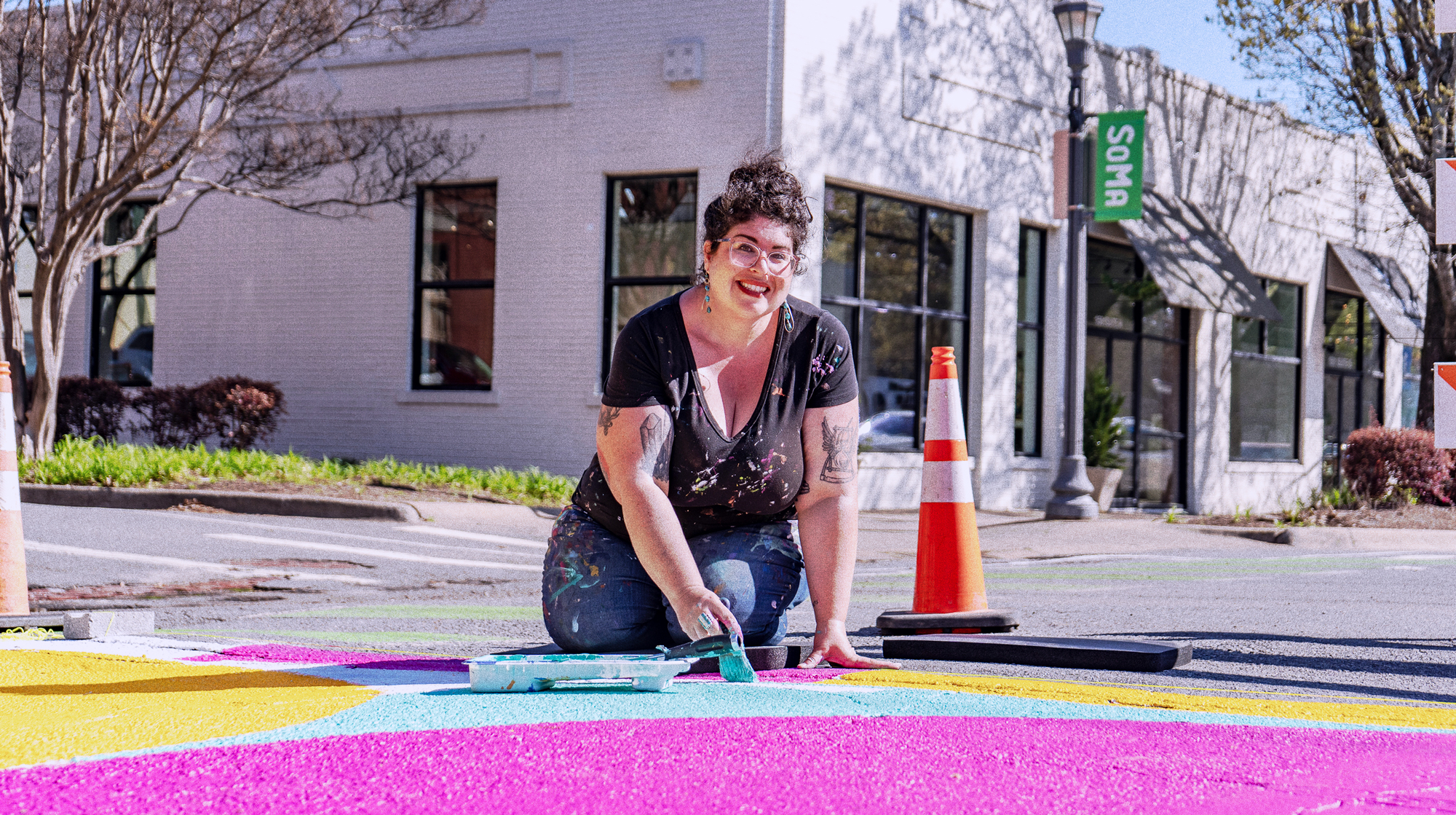
South Main Street in Little Rock, Arkansas, has all the makings of a classic downtown: local restaurants, historic buildings and a community of people that gives the city its character. But a closer look reveals something unexpected: math, painted right onto the crosswalks.
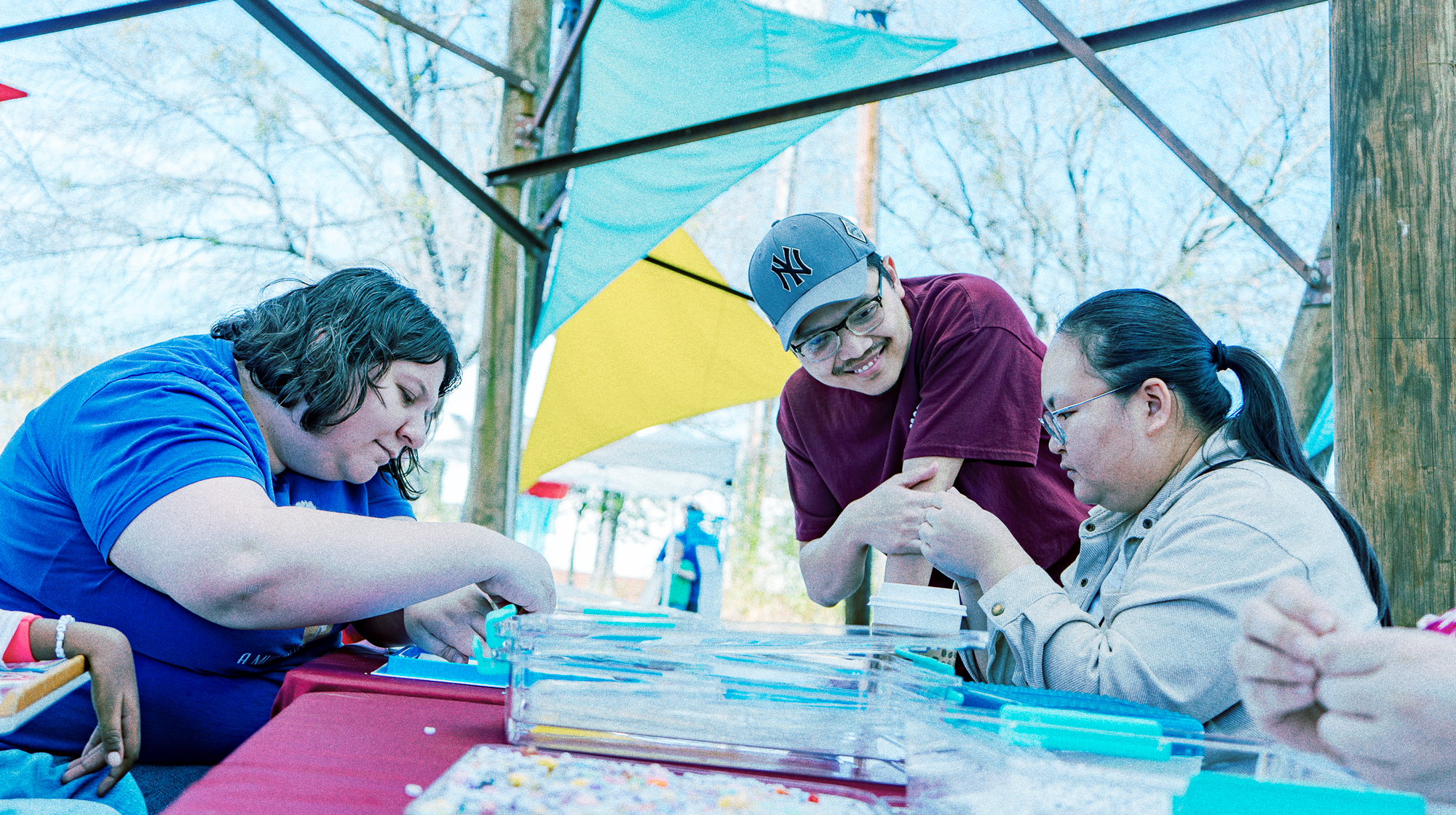
This unique artwork is part of the Math Path, a walkable string of public murals created by SoMa 501, the Main Street organization for the south side of Little Rock. Each crosswalk is part of the Math on Main program, supported by the Simons Foundation’s Infinite Sums initiative. Math on Main is a community-led public art series that brings math to life through culture, food, music and shared experience. The events are held on “math holidays” — Pi Day (3/14), Infinity Day (8/8) and the upcoming Fibonacci Day (11/23).
The paths also exist to address a critical problem in Little Rock: dangerous speeding. The idea is that drivers and pedestrians slow down to engage with these outdoor galleries thoughtfully and safely.
The events eventually end, but the artwork — and relationships with math — are designed to stay. Behind it all is Elizabeth Michael, the executive director of SoMa 501. Bringing artists, mathematicians and neighbors together is part of her everyday work. We recently spoke with Michael about how the Math Path took shape, the relationships that keep it moving and what she has learned about building community around math as she gears up for Fibonacci Day.
The transcript below has been edited for clarity and brevity.
Thank you for taking the time to speak with us, Elizabeth! Could you tell us more about yourself, your organization, and the role it plays in your community?
I am the executive director for SoMa 501, a Main Street organization located in downtown Little Rock. There are actually two Main Street organizations here: one on the north side of the highway and one on the south. We are on the south side of the highway and have been working to improve our area for 20 years now. I’ve been with the organization for four years, and in those four years, we’ve seen a lot of growth, improvement and momentum.
The pandemic was a hard reset for SoMa 501. And there was a big question mark about whether this organization would exist. Our board had dwindled to maybe three people, and our status with Main Street was in jeopardy. A group of people said, “We want this to keep existing,” and they held a fundraiser to hire an executive director. They hired me, and since then, we’ve just been getting after it.
Our job is to bring people down to Main Street, build a strong sense of community, preserve our historic structures and make the area more walkable and welcoming. We do that within the Main Street Four Points approach, which gives us pillars to build a work plan around.
Can you tell us more about your approach to math and how it relates to previous events related to safety?
Previously, we held an event called Slowdown SoMa. We’re a pedestrian- and cyclist-friendly neighborhood, so we did a traffic study. The highest recorded speed on Main Street was 81 miles per hour. We’ve got kids in strollers down here, so that’s scary. We installed a pop-up median and implemented other traffic-calming measures, which brought speeds down considerably. There were a lot of positive impacts, so we started thinking about how to make it permanent.
At the same time, we learned about Infinite Sums. Our approach to math really grew out of the grant that the Simons Foundation offered to Main Street communities during the “In the Path of Totality” initiative. We had many people on the board who were passionate about STEM. Everything had gone really well with our STEM programming, and we had all these volunteers excited. I knew I wanted to do something, and the wheels started turning on how it could all fit together with Infinite Sums, and that is how the Math Path was born. We get a place-based, inspirational math project, we slow traffic down and we get to hold these events. It was like building blocks stacking on each other. They just made so much sense.
The events themselves have been amazing, with people leaving Pi Day and Infinity Day just so inspired.
You've shared how these math experiences bring people together and strengthen your community. Thinking back to your own life, what has your relationship with math been like?
Most people’s first relationship with math is through education, and I was always a really good math student. I took more math classes because I wanted higher grades, and I took the things I was good at. I liked calculus, and I liked geometry. Eventually, I took all the AP classes in high school and thought, I’m so good at this, I’m going to be an engineer.
So I went to a college with a very good engineering program and promptly switched majors. I thought, “Oh no, this is a different level” [laughs]. But I always had a positive relationship with math. It was oddly soothing to do.
Then I left it behind. Somewhere along the way, I decided I was more of an artistic person, and I ended up in advertising and marketing. But math came back into my life when I ran two of my own businesses. Math becomes integral to your life, no matter what you’re doing, whether it’s payroll or your annual budget. I went back and got my MBA and took what I called “fancy Excel,” where my professors taught us these really complicated formulas. By the time I needed math again, I couldn’t do it in my head anymore, and I thought, that’s not okay. So I started practicing again for fun. I guess that’s why people do Sudoku [laughs].
If I’d had a negative experience with math, I might not have been so keen on Math on Main and the Math Path. But I’ve always had a positive one.
Can you tell us more about your relationship with the mathematicians in your community?
We’re still building them, and it’s been a lot of fun. I went into it with a very open and, I guess, humble attitude, because I really needed their expertise. It was kind of like, okay, what do y’all want to do? [laughs]. The mathematicians were coming at it from a very different perspective. They had done math programming before, but it was more tables, where you walk up to one, do an activity, then walk up to the next. What we were doing was much more out of the box for them, so it was really fun to collaborate and come up with ideas together.
How did you build that relationship and find ways to bring such distinct perspectives together?
A lot of it came from listening to what they’d learned from their own programs. The free food at our events came from their experience. We needed free food to make this accessible and break down any barriers. People might think math is for the highly educated or math is for rich people, or they might say, “I was never good at math.” If there’s free food, that’s a way of saying everyone is welcome; y’all come on. It’s a very Southern, hospitable thing to do. That was a big “aha moment” for me. Once we had food, all these ideas started spiraling out, just like the Fibonacci sequence. It opened up so many new doors.
We had some meetings over meals and had fun at some events, too. After a program ends, I usually host a wrap-up at my house where we talk through how it went. We’ve learned a lot about each other through all of this. One of the mathematicians, I realized, I already knew. She’s an artist who has been a vendor at all of our events, so it was fun to get her perspective after seeing her at our events this whole time.
Working through the tougher moments together helped build trust, too. When you pair artists with scientists or mathematicians, everyone cares so much about getting it right that you can get lost in the weeds. It wasn’t enough to just bring everyone into the same room anymore. People are really invested. One of our committee members is an architect, and she has both a mathematical and an artistic perspective. She was able to mediate when there were disagreements, and it taught me how valuable that middle person is.
SoMa is really about bringing people together around the things that already make a neighborhood feel like a community, like food, art, music and local businesses. What have you learned about the ways those things can help people see math in a new way? What have you learned by developing celebrations around math for your community?
The biggest lesson is that food and community tell people they belong before anyone has to say a word about math. Free food was the clearest example. It signals that this is for everyone, not just people who think of themselves as math people.
The other thing I’ve learned is that, when there’s a theme, things go better. To me, math is a theme you can really sink your teeth into, one with a lot of legs. There’s very little pushback on anything STEM-related that we do, and the Math Path has only brought joy. Themes like math also tap into a specific audience, and there are auxiliary niche audiences around that. So you’ve got a built-in audience, and you can extend it to the wider community with very little objection.
I love that we can bring people together in a joyful, happy way and give them big, mind-blowing memories. It’s not just about having a party, and it’s not just about making art either. I love that we can bring it all together in a way that feels meaningful and deep.
Can you recall a moment from these celebrations when you saw someone have a meaningful connection with math? What did that experience mean to you?
At Pi Day, one of the activities was to write down as many digits of pi as you could remember on a walk-by board. One of our math partners wrote theirs down and kept coming back to check whether they were still the reigning champion. Then, one time, they walked by and saw that someone else had written down more digits. It was an eight-year-old child. The mathematician was like, “I can’t believe he beat me.”
Then the folks from the Museum of Discovery, who were set up next to us, shared that the same child comes to all their events and that they love having him around. That was touching to me. There’s this budding community of STEM people, the same folks coming and learning and connecting. They didn’t all know each other, but it showed me that, to some people, this really matters. To the future mathematicians of the world, this is important.
And another one was with my son. He’s almost four years old, and sometimes in group settings it’s hard for him to connect with people. There was one activity that we were doing with this giant rubber band, and he was just so into it. It was just really exciting to watch him connect with and want to talk to all these people. As a mother, I’d seen him do that a few times, but not with so much excitement. So it just showed me that even for him, someone so close to my heart, this is important to people of all different ability types and for all people. Different people were all enjoying the same thing together.
What does it mean to you to have math become part of the physical landscape of the neighborhood through these Math Paths?
It means the work doesn’t end when the event does. After Slowdown SoMa, we started thinking about how to make that kind of change permanent, and the Math Path is how we did it. It’s place-based, it slows traffic down, and it’s there every day, not just on event days. It stays after the activations are over and keeps bringing people in. The State of Arkansas gave us another grant to promote educational partnerships in the schools around the Math Path and arts education. It’s not a huge grant, but it pays for educators and artists to bring kids to the Math Path and experience it for years to come.
The Math Path also gives us an identity. Culturally, Little Rock says we invented cheese dip, or points to the Little Rock Nine, but there’s not a whole lot beyond that. The Math Path is something no one can argue with, and no one else has. I want to see it expand and the STEM programming grow, because it’s giving people a whole new reason to come here. It rises above all the other things people could object to. The Math Path is something positive that Little Rock can really call its own.